
viernes, 4 de noviembre de 2016


miércoles, 2 de noviembre de 2016

domingo, 30 de octubre de 2016
Nobel prize in chemistry 2016
The Royal Swedish Academy of Sciences has decided to award the Nobel Prize in Chemistry 2016 to
Jean-Pierre Sauvage
University of Strasbourg, France
University of Strasbourg, France
Sir J. Fraser Stoddart
Northwestern University, Evanston, IL, USA
Northwestern University, Evanston, IL, USA
and
Bernard L. Feringa
University of Groningen, the Netherlands
University of Groningen, the Netherlands
"for the design and synthesis of molecular machines"
They developed the world's smallest machines
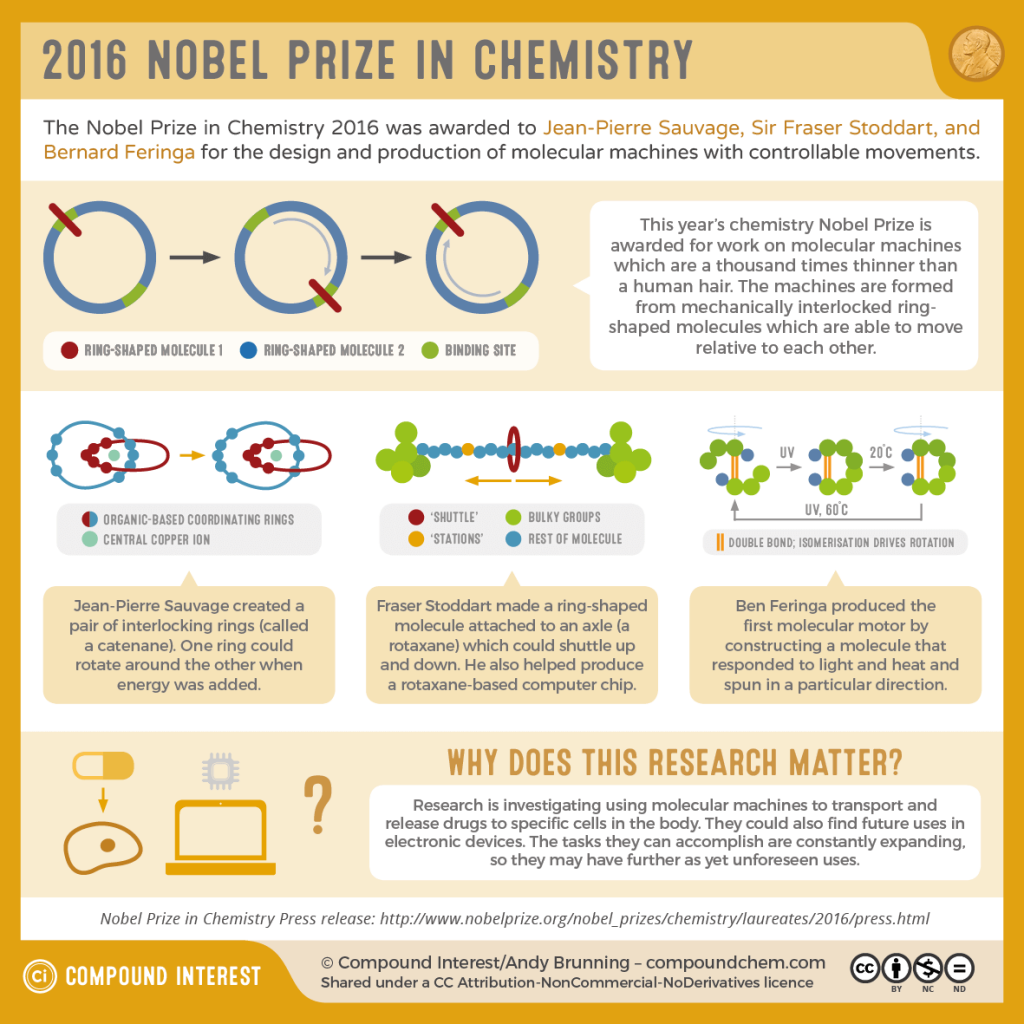
A tiny lift, artificial muscles and minuscule motors. The Nobel Prize in Chemistry 2016 is awarded to Jean-Pierre Sauvage, Sir J. Fraser Stoddart and Bernard L. Feringa for their design and production of molecular machines. They have developed molecules with controllable movements, which can perform a task when energy is added.
The development of computing demonstrates how the miniaturisation of technology can lead to a revolution. The 2016 Nobel Laureates in Chemistry have miniaturised machines and taken chemistry to a new dimension.
The first step towards a molecular machine was taken by Jean-Pierre Sauvage in 1983, when he succeeded in linking two ring-shaped molecules together to form a chain, called a catenane. Normally, molecules are joined by strong covalent bonds in which the atoms share electrons, but in the chain they were instead linked by a freer mechanical bond. For a machine to be able to perform a task it must consist of parts that can move relative to each other. The two interlocked rings fulfilled exactly this requirement.
The second step was taken by Fraser Stoddart in 1991, when he developed a rotaxane. He threaded a molecular ring onto a thin molecular axle and demonstrated that the ring was able to move along the axle. Among his developments based on rotaxanes are a molecular lift, a molecular muscle and a molecule-based computer chip.
Bernard Feringa was the first person to develop a molecular motor; in 1999 he got a molecular rotor blade to spin continually in the same direction. Using molecular motors, he has rotated a glass cylinder that is 10,000 times bigger than the motor and also designed a nanocar.
2016's Nobel Laureates in Chemistry have taken molecular systems out of equilibrium's stalemate and into energy-filled states in which their movements can be controlled. In terms of development, the molecular motor is at the same stage as the electric motor was in the 1830s, when scientists displayed various spinning cranks and wheels, unaware that they would lead to washing machines, fans and food processors. Molecular machines will most likely be used in the development of things such as new materials, sensors and energy storage systems.
Read more about this year's prize
To read the text you need Acrobat Reader.
Image - Elastic molecular structure (pdf 828 kB)
Image - Molecular elevator (pdf 978 kB)
Image - Molecular chain (pdf 813 kb)
Image - Molecular motor (pdf 820 kb)
Image - Molecular shuttle (pdf 8902 kb)
Image - Molecular knots (pdf 820 kb)
Image - Nanocar (pdf 874 kb)
Image - Molecular elevator (pdf 978 kB)
Image - Molecular chain (pdf 813 kb)
Image - Molecular motor (pdf 820 kb)
Image - Molecular shuttle (pdf 8902 kb)
Image - Molecular knots (pdf 820 kb)
Image - Nanocar (pdf 874 kb)
All illustrations: Copyright © Johan Jarnestad/The Royal Swedish Academy of Sciences
Jean-Pierre Sauvage, born 1944 in Paris, France. Ph.D. 1971 from the University of Strasbourg, France. Professor Emeritus at the University of Strasbourg and Director of Research Emeritus at the National Center for Scientific Research (CNRS), France.
https://isis.unistra.fr/laboratory-of-inorganic-chemistry-jean-pierre-sauvage
https://isis.unistra.fr/laboratory-of-inorganic-chemistry-jean-pierre-sauvage
Sir J. Fraser Stoddart, born 1942 in Edinburgh, UK. Ph.D. 1966 from Edinburgh University, UK. Board of Trustees Professor of Chemistry at Northwestern University, Evanston, IL, USA.
http://stoddart.northwestern.edu
http://stoddart.northwestern.edu
Bernard L. Feringa, born 1951 in Barger-Compascuum, the Netherlands. Ph.D.1978 from the University of Groningen, the Netherlands. Professor in Organic Chemistry at the University of Groningen, the Netherlands.
www.benferinga.com
www.benferinga.com
Prize amount: 8 million Swedish krona, to be shared equally between the Laureates.
Further information: http://kva.se and http://nobelprize.org
Press contact: Jessica Balksjö Nannini, Press Officer, phone +46 8 673 95 44, +46 70 673 96 50, jessica.balksjo@kva.se
Expert: Olof Ramström, member of the Nobel Committee for Chemistry, phone +46 8 790 69 15, +46 70 433 42 60, ramstrom@kth.se
Further information: http://kva.se and http://nobelprize.org
Press contact: Jessica Balksjö Nannini, Press Officer, phone +46 8 673 95 44, +46 70 673 96 50, jessica.balksjo@kva.se
Expert: Olof Ramström, member of the Nobel Committee for Chemistry, phone +46 8 790 69 15, +46 70 433 42 60, ramstrom@kth.se
The Royal Swedish Academy of Sciences, founded in 1739, is an independent organisation whose overall objective is to promote the sciences and strengthen their influence in society. The Academy takes special responsibility for the natural sciences and mathematics, but endeavours to promote the exchange of ideas between various disciplines.
sábado, 29 de octubre de 2016
Gamificación. Diario de aprendizaje. Segunda semana.
Dinámica

Nube de palabras

Meme

Infografía

Análisis DAFO del prototipo
Debilidades
- Equipamiento informático inadecuado
- Falta de instrumentos variados para todos los alumnos
Amenazas
- Criticas de los padres
Fortalezas
- Podemos decidir qué instrumentos utilizar
- No dependemos de las herramientas TIC para todo el proceso
Oportunidades.
- Los juegos están muy presentes en la sociedad
- Es un incentivo para la mejora del sistema
Gamificación. Diario de aprendizaje. Segunda semana.
Dinámica
Nube de palabras
Meme
Infografía
Análisis DAFO del prototipo
Debilidades
- Equipamiento informático inadecuado
- Falta de instrumentos variados para todos los alumnos
Amenazas
- Criticas de los padres
Fortalezas
- Podemos decidir qué instrumentos utilizar
- No dependemos de las herramientas TIC para todo el proceso
Oportunidades.
- Los juegos están muy presentes en la sociedad
- Es un incentivo para la mejora del sistema
Gamificación. Diario de aprendizaje. Primera semana
La primera tarea consiste en hacer un diario del trabajo realizado, que será este blog de tumbrl:
que ya he usado para otros proyectos de formación similares donde todo lo relativo a este MOOC irá etiquetado con #gamificaMOOC.
También dentro de esta primera tarea está la de elaborar un AVATAR
He incluido un widget de twitter con el hashtag #gamificaMOOC.
Otra de las partes de esta primera tarea es la Curación de Contenidos sobre Gamificación. Yo he optado por un padlet donde ya tenia algunos recursos sobre gamificación
viernes, 28 de octubre de 2016
jueves, 27 de octubre de 2016
The Painted Bat (Kerivoula picta),
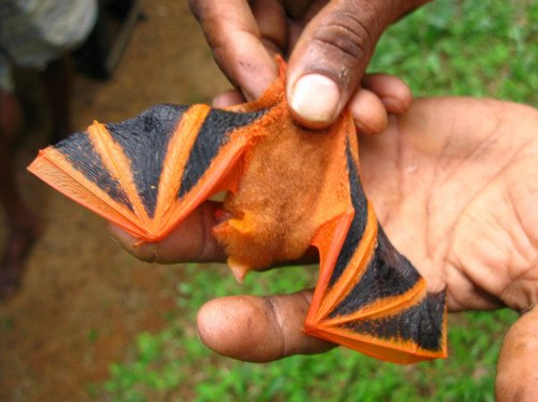
The Painted Bat (Kerivoula picta), as it is aptly named, is a small species of bat that grows to have a body length of 3 to 5.5 cm, tail length of 3 to 5.5 cm, and a wingspan of 18–30 cm. They’re tiny yet stunningly colored with bright orange or scarlet bodies, black wings and orange along the fingers.The reason for the unique coloration is due to the fact that these bats like to roost in vulnerable locations such as in the suspended nests of weaver finches and sunbirds or under the eaves of African huts. The bright colors act as a warning to other creatures that this is a “scary bat” and to leave it alone. (Source)
(vía sixpenceee)
miércoles, 26 de octubre de 2016
La selección de la ciencia en España 2016.
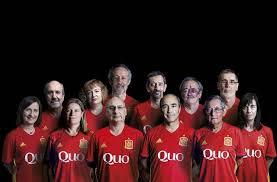
La revista QUO y el CSIC han presentado este martes a la Selección Española de la Ciencia 2016, un equipo formado por algunos de los investigadores más brillantes de nuestro país:
La Selección Española de Ciencia 2016 está formada por profesionales de prestigio internacional en diferentes áreas:
- Pedro Cavadas, cirujano plástico especialista en trasplantes
- Mariano Barbacid, bioquímico en el Centro Nacional de Investigaciones Oncológicas (CNIO)
- Susana Marcos, directora del Instituto de óptica ‘Daza de Valdés’ del CSIC
- Alberto Ruiz Jimeno, fundador del grupo altas energías del IFCA
- Laura M. Lechuga, profesora de investigación en el Instituto de Nanociencia y Nanotecnología catalán
- Francisco J. Martínez Mojica, investigador de la Universidad de Alicante y científico en el desarrollo de CRISPR
- José Manuel Galán, egiptólogo e impulsor del proyecto Djehuty
- Juan José Gómez Cadenas, investigador de IFIC y director del experimento Next
- Carmen Martínez, directora del Grupo de Viticultura en la Misión Biológica del CSIC en Galicia
- Mariano Esteban, Presidente de la Real Academia Nacional de Farmacia
- Mara Dierssen, investigadora del Centro de Regulación Genómica de Barcelona
- Miguel Delibes de Castro, investigador en la Estación Biológica de Doñana
A los que se suma como “último fichaje”Manel Esteller, director del programa de Epigenética y Biología del IDIBELL.
Esta selección española juega todos los días un partido contra el cáncer, el cambio climático, la escasez de recursos energéticos, la diabetes… Un partido para conocer mejor el mundo en el que vivimos, proteger la naturaleza que nos rodea, curar a nuestros hijos y a nuestros padres… El partido de la ciencia no tiene minuto final, y lo ganamos todos.
Los miembros del equipo de la Selección Española de la Ciencia 2016, recibirán su camiseta de manos de algunos de los mejores deportistas del país en una gala que se celebrará el próximo 4 de octubre en la sede del CSIC en Madrid y en la que se homenajeará a todos los científicos españoles.
Jorge Alcalde, director de la revista QUO explicó: “A pesar de todos los sinsabores que sufre la investigación española, los problemas de financiación, la fuga de cerebros, la crisis…, España juega en la Champions League de la ciencia desde hace tiempo. Sin embargo, los hombres y mujeres que hacen ciencia en España no suelen ocupar los grandes titulares. Nuestra intención es darles por un día, el foco que creemos que se merecen. Y lo hacemos uniendo sus nombres al deporte, en el que España es también un referente mundial”.
Y añade, “el deporte y ciencia comparten valores como el esfuerzo, el trabajo en equipo, la vocación… Nos parece que quizás, los científicos podrían aprender del mundo del deporte la capacidad de proyección de su trabajo y los deportistas apoyar con su popularidad la labor de estos investigadores. De ahí que hayamos puesto en marcha hace tres años esta iniciativa”.
Esta iniciativa cuenta a partir de este año también con el apoyo de Marca España que se ha sumado como colaborador al proyecto. España es un país de ciencia y de tecnología. Nuestro país es una referencia mundial en determinadas áreas de I+D+i así como en sectores como la investigación médica, las energías limpias,infraestructuras inteligentes,biotecnología y tecnologías para la salud, biología molecular, bioquímica, investigación…
Suscribirse a:
Entradas (Atom)