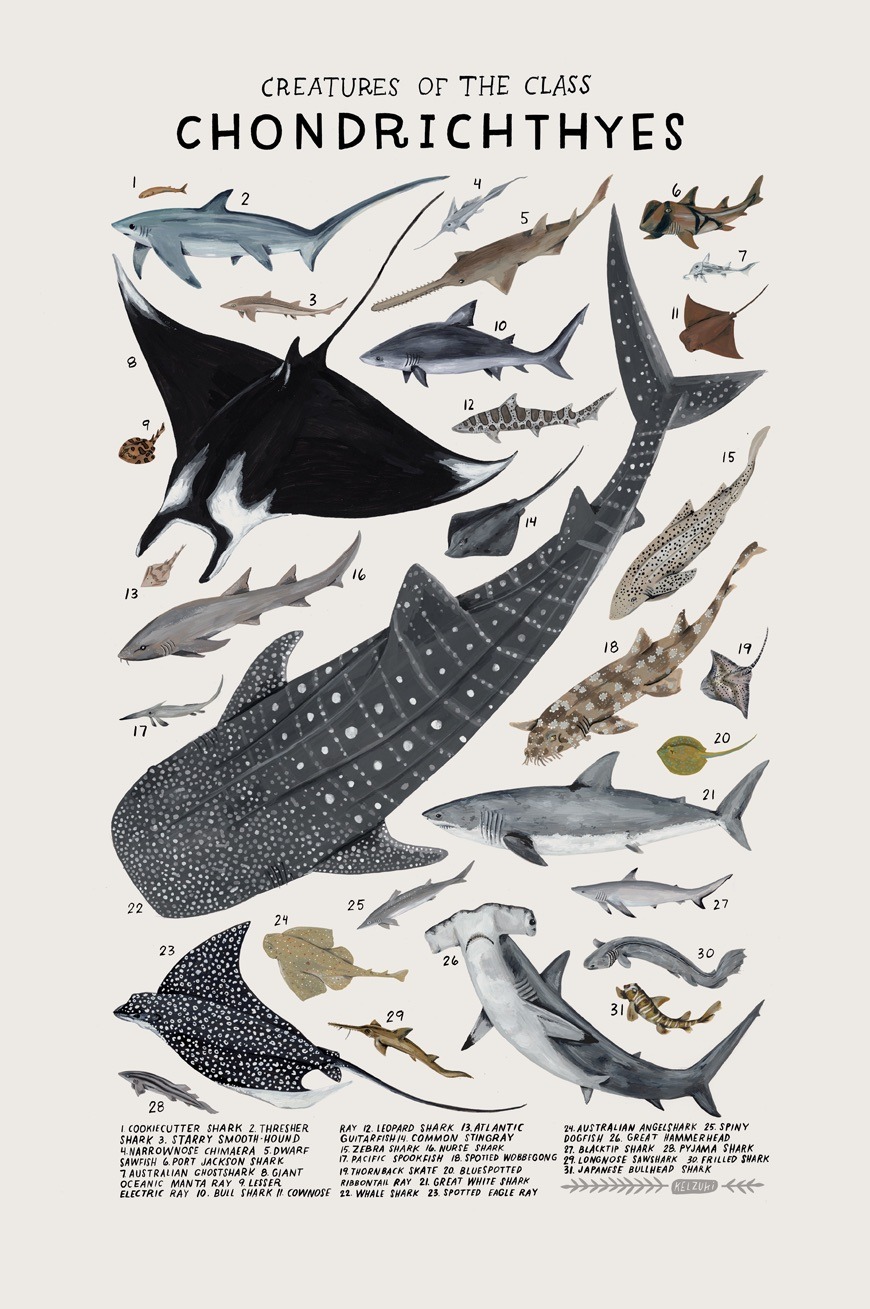
Mostrando entradas con la etiqueta vertebrados. Mostrar todas las entradas
Mostrando entradas con la etiqueta vertebrados. Mostrar todas las entradas
martes, 25 de julio de 2017


lunes, 24 de julio de 2017
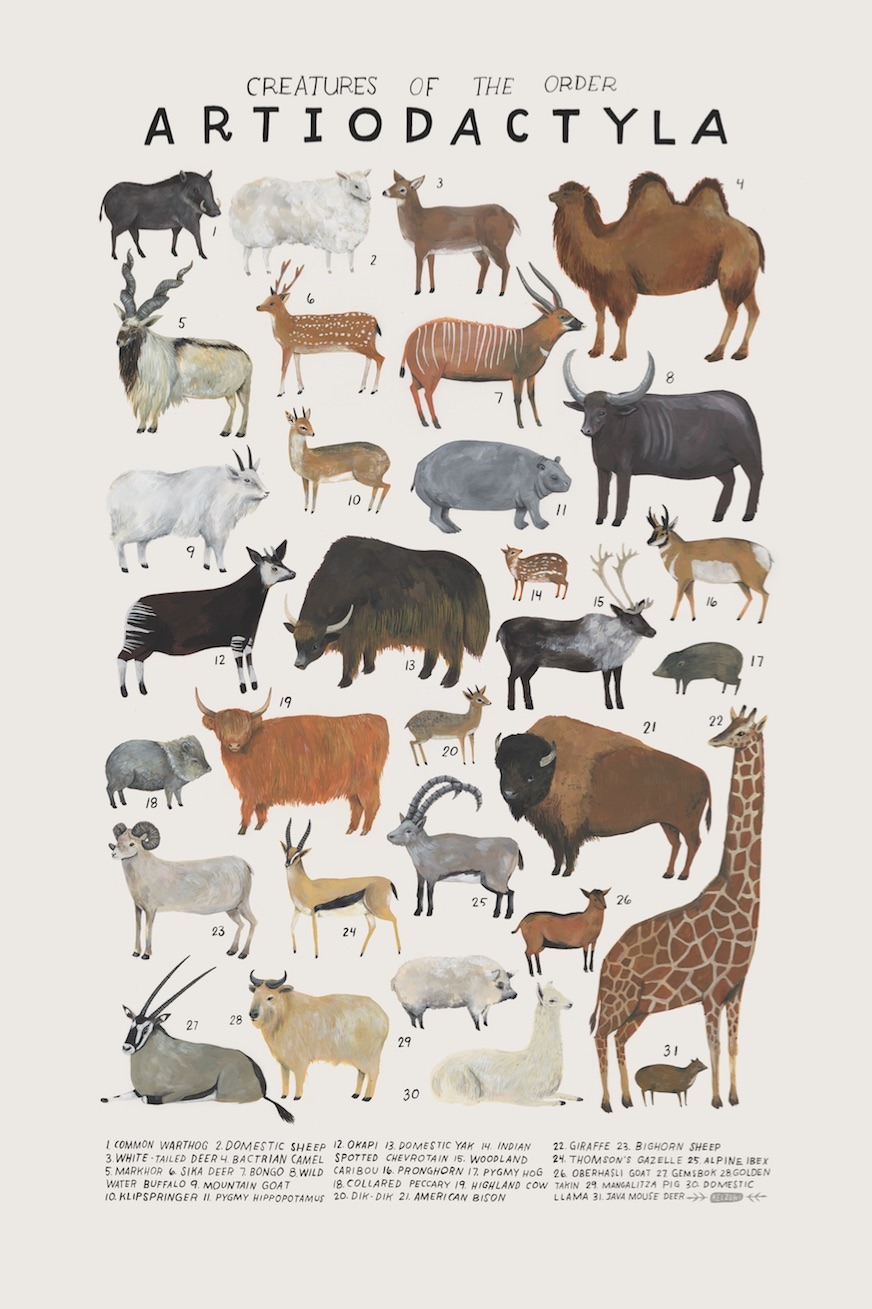
viernes, 21 de julio de 2017

jueves, 27 de octubre de 2016
The Painted Bat (Kerivoula picta),
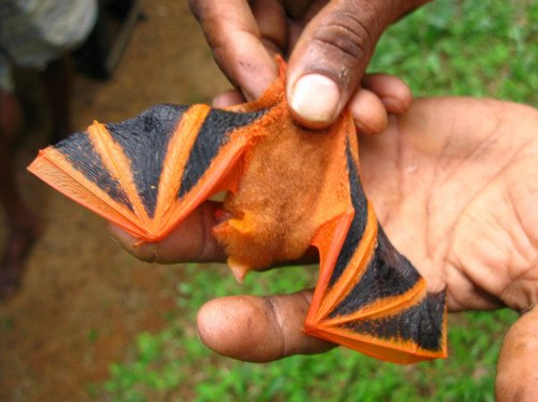
The Painted Bat (Kerivoula picta), as it is aptly named, is a small species of bat that grows to have a body length of 3 to 5.5 cm, tail length of 3 to 5.5 cm, and a wingspan of 18–30 cm. They’re tiny yet stunningly colored with bright orange or scarlet bodies, black wings and orange along the fingers.The reason for the unique coloration is due to the fact that these bats like to roost in vulnerable locations such as in the suspended nests of weaver finches and sunbirds or under the eaves of African huts. The bright colors act as a warning to other creatures that this is a “scary bat” and to leave it alone. (Source)
(vía sixpenceee)
viernes, 25 de diciembre de 2015
200-Year-Old Giant Chinese Salamander Discovered in a Cave by Local Fishermen

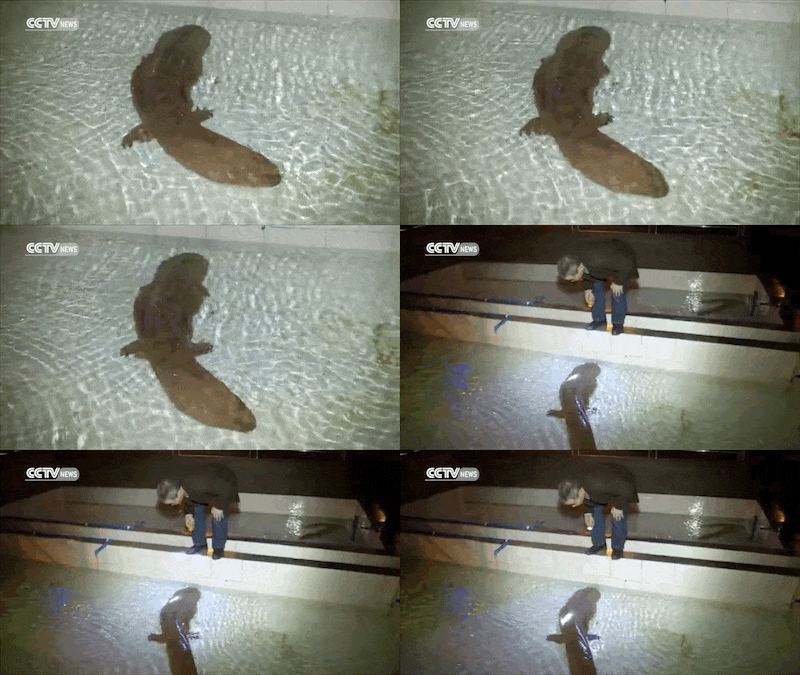
200-Year-Old Giant Chinese Salamander Discovered in a Cave by Local Fishermen
An extremely rare Chinese giant salamander was recently discovered in a cave outside Chongqing, China. This massive 114-pound ancient amphibian was literally stumbled upon, as a local fisherman accidentally tread on something “soft and slimy.” Conservationists were contacted after locals determined that the 5-foot-long animal was ill, and researchers estimate that this particular individual may actually be more than 200 years old, which would make it the world’s oldest living amphibian! With an average life span of 80 years, if this estimation stands true, it would definitely change things up for the species’ demographics.
Rarely seen in the wild, the giant salamander species is known to be critically endangered through a combination of pollution, habitat loss, and over-hunting. The salamander is a mysterious and enigmatic creature, but sadly, is also considered a culinary delicacy in China. Currently, conservation programs are under way to save wild Chinese giant salamanders, and protect the wild river habitats in which these “living fossils” reside.(Source: My Modern Met)
sábado, 31 de octubre de 2015
Northern royal flycatcher (Onychorhynchus coronatus mexicanus)
Northern royal flycatcher (Onychorhynchus coronatus mexicanus)The northern royal flycatcher is a bird in the Tyrannidaefamily. It is found in Mexico, south through most of Central America, to north-western Colombia and far western Venezuela. Its natural habitat is subtropical or tropical moist lowland forests. The northern royal flycatcher has an erectile fan-shaped crest, coloured red in the male and yellow-orange in the female. The display with the crest fully raised is seen extremely rarely, except during banding sessions.

Foto y texto gracias a http://cool-critters.tumblr.com/
photo credits: photo-world, wiki
jueves, 29 de octubre de 2015
Etruscan shrew (Suncus etruscus)
Etruscan shrew (Suncus etruscus)
The Etruscan shrew is the smallest known mammal by mass, weighing only about 1.8 grams (0.063 oz) on average. It has a body length of about 4 centimetres (1.6 in) excluding the tail. It is characterized by very rapid movements and a fast metabolism, eating about 1.5–2 times its own body weight per day. It feeds on various small vertebrates and invertebrates, mostly insects, and can hunt individuals of the same size as itself. These shrews prefer warm and damp climates and are widely distributed in the belt between 10° and 30°N latitude stretching from Europe and North Africa up to Malaysia. They are relatively rare and are endangered in some countries.
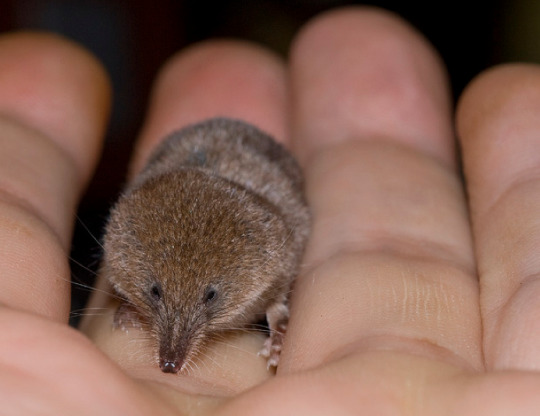
Foto y texto gracias a http://cool-critters.tumblr.com/
photo credits: wiki, thefeaturedcreature
martes, 27 de octubre de 2015
Greater roadrunner (Geococcyx californianus)
Greater roadrunner (Geococcyx californianus)
The greater roadrunner is a long-legged bird in the cuckoo family, Cuculidae, from Southwestern United States and Mexico. The greater roadrunner nests on a platform of sticks low in a cactus or a bush and lays 3–6 eggs, which hatch in 20 days. Greater roadrunners measure 61 cm in length, about half of which is tail. They have long legs and a slender, pointed bill. This bird walks around rapidly, running down prey. It feeds mainly on small animals including insects, spiders (including black widows), tarantulas, scorpions, mice, small birds and especially lizards and small snakes. It kills prey by holding the victim in its bill and slamming it repeatedly against the ground.

Foto y texto gracias a http://cool-critters.tumblr.com/
photo credits: drumguy8800, El Brujo, MaryBeth Farre
domingo, 25 de octubre de 2015
Tomato frog (Dyscophus)
Tomato frog (Dyscophus)
Tomato frogs are any of the three species of genusDyscophus (family Microhylidae): D. antongilii, D. insularis, orD. guineti. They are endemic to Madagascar. When threatened, a tomato frog puffs up its body. If a predator grabs a tomato frog in its mouth, the frog’s skin secretes a thick substance that gums up the predator’s eyes and mouth, causing the predator to release the frog to free up its eyes. The gummy substance contains a toxin that occasionally causes allergic reactions in humans. The lifespan of the tomato frog can be from 6 to 8 years. They tend to eat small insects and invertebrates.
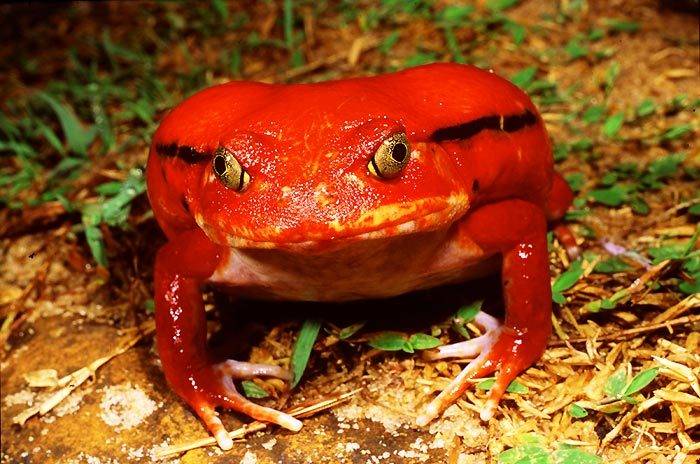
Link gracias a http://cool-critters.tumblr.com/
photo credits: lonestardigital, Franco Andreone
domingo, 23 de agosto de 2015
Deep Sea Goosefish (Sladenia)

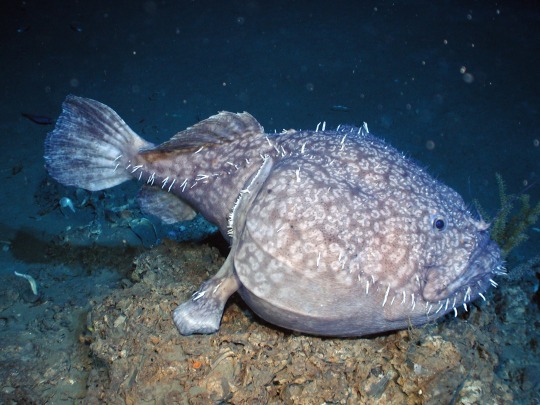
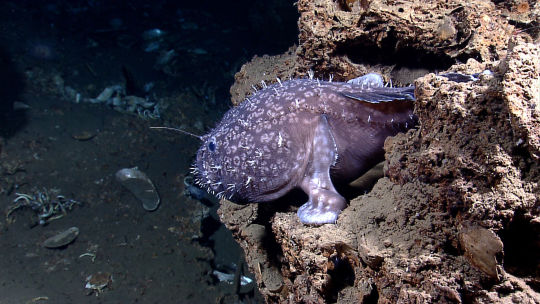
http://typhlonectes.tumblr.com/Deep Sea Goosefish (Sladenia) are anglerfish from the deep sea who lack the furious, devilish facial expressions of the classic deep sea anglerfish.They sit their podgy bodies on the sea floor, resting on four, thick fins adapted for walking.They have the classic lure for attracting prey but it isn’t luminescent.I’m sure things change when dinner comes along, but when they’re just sitting there they look like the sweetest little deep sea puppies!Images: NOAA
jueves, 20 de agosto de 2015
Cook Inlet Beluga Whale.
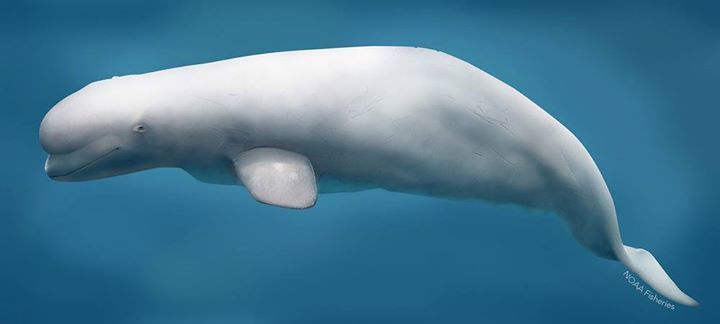
NOAA Species Spotlight: Cook Inlet Beluga Whale
Beluga whales squeal, squeak, and chirp, and it’s why sailors long ago called them “sea canaries.” This species is gregarious and small (up to 15 feet long). Of the five Alaskan stocks, the Cook Inlet beluga stock is the smallest and the most isolated from other belugas.
Cook Inlet belugas once were a valuable part of the regional Alaska Native subsistence diet, but the population has declined rapidly. This rapid decline was most likely due to unregulated subsistence harvest at a level that this small population could not sustain. The hunt has been suspended since 2005, but unfortunately the whale population has not recovered as expected.
Cook Inlet belugas once were a valuable part of the regional Alaska Native subsistence diet, but the population has declined rapidly. This rapid decline was most likely due to unregulated subsistence harvest at a level that this small population could not sustain. The hunt has been suspended since 2005, but unfortunately the whale population has not recovered as expected.
NOAA Fisheries designated the Cook Inlet beluga whale population as depleted under the Marine Mammal Protection Act in 2000, and listed these belugas as an endangered species under the Endangered Species Act (ESA) in 2008. The rapid decline and dire status of the Cook Inlet beluga whale population makes it a priority for focusing efforts within NOAA Fisheries and with our partners to stabilize and prevent extinction of this iconic species...
martes, 11 de agosto de 2015
Humpback Batfish - Platax batavianus.
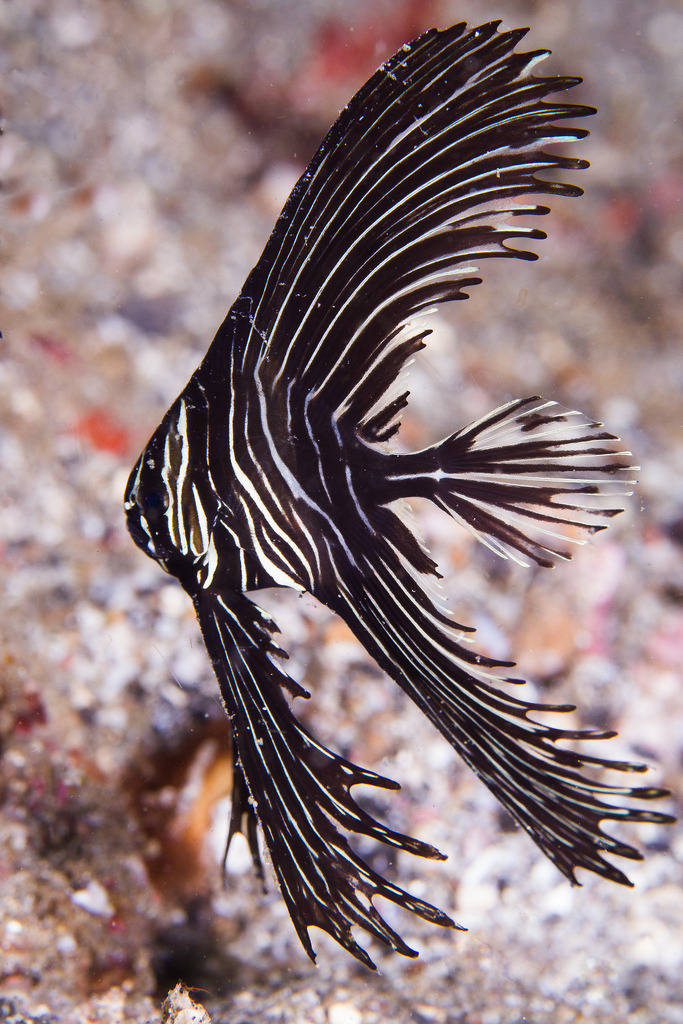
Humpback Batfish - Platax batavianus
Platax batavianus (Perciformes - Ephippidae) is a species of batfish which inhabits continental reefs from Madagascar to Indonesia and Australia. Juveniles of this species, like this one in the photo, are black with vertical white lines on body and fins; this zebra-pattern serves well as camouflage when sheltering with crinoids.
Adults are quite different, silvery, with only a dark bar through eye and another (faint) bar just behind head.
sábado, 8 de agosto de 2015
Pacific Spiny Lumpsucker - Eumicrotremus orbis.
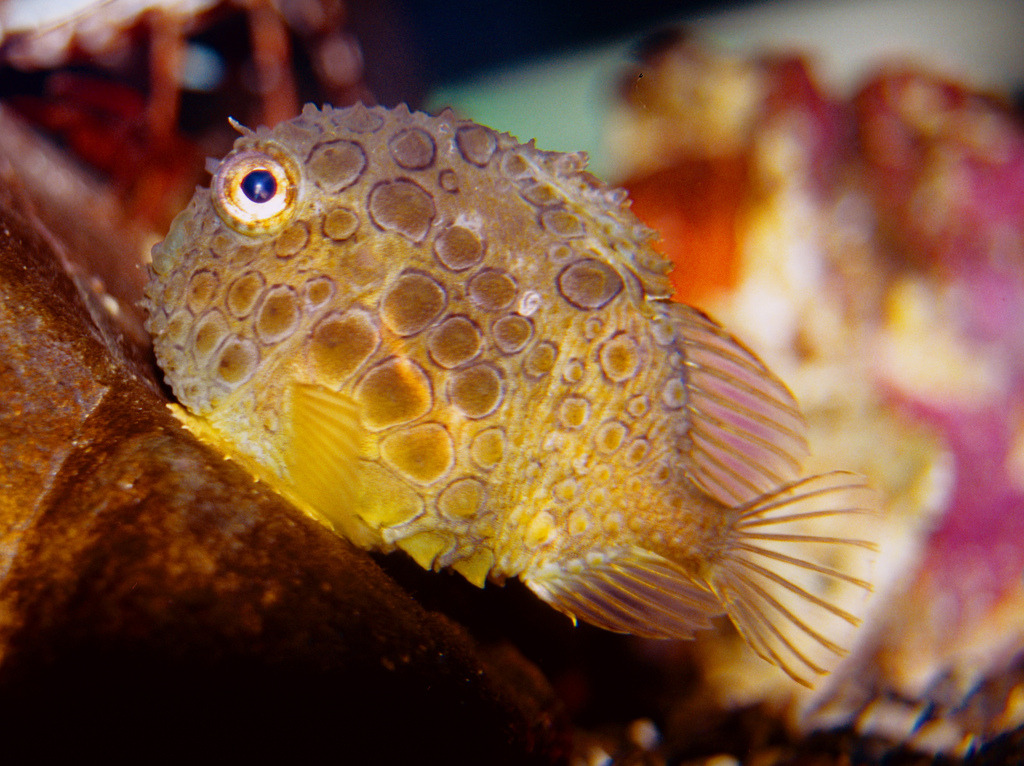
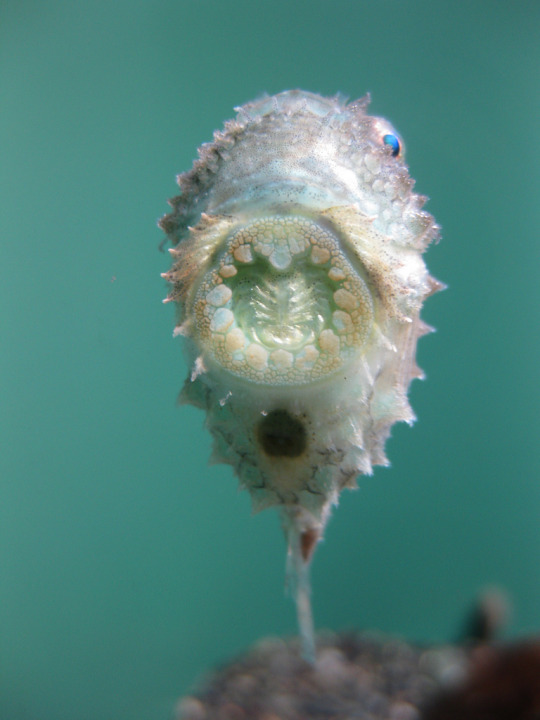
Pacific Spiny Lumpsucker - Eumicrotremus orbis
Some people describe the Pacific Spiny Lumpsucker, Eumicrotremus orbis (Scorpaeniformes - Cyclopteridae), as a ping-pong ball with fins, and yes it seems to be that.
Usually located in eel grass beds at night, these comical fish have a modified pelvic fin that works as a suction disk. This disk is used to attach the fish to rocks, shells and blades of eel grass. When disturbed, the fish hovers about, changing directions aimlessly like a tiny helicopter (they are very inefficient swimmers).
They are quite common, ranging from the waters off the Washington coast, up around the arc of the Aleutian Islands, to the Asian mainland and the northern islands of Japan, and in the Bering Sea.
The largest recorded Lumpsucker was five inches in length, but the most of the lumpies that divers see are about the size of a quarter.
miércoles, 2 de octubre de 2013
Cosas que deberíamos saber sobre ciencias (27).Los vertebrados.
VERTEBRADOS:
PECES:
- Osteíctios o peces óseos. Su esqueleto esta total o parcialmente osificad. Su cuerpo es fusiforme. Sardinas, esturiones o lenguados.
- Condrcítios su esqueleto es de cartílago. Tienen sus aletas agrupadas en dos zonas: las anteriores o escapulares y las posteriores o pelvianas. Tiburón.
- Ciclostomata son vestigios de los peces mas antiguos como la lamprea o anguila babosa.
ANFIBIOS:
- Anuros los adultos carecen de cola. Sus pata traseras están adaptadas al salto. Pueden emitir sonidos, croan como la rana y el sapo
- Urodelos su cola es visible posee un tronco alargado y sus extremidades anteriores y posteriores son cortas como la salamandra y el tritón.
REPTILES
- Saurios tienen cuatro patas, cola alarga y si la pierden la pueden regenerar. Son capaces de mudar su piel y comen insectos. Lagarto, camaleón, salamanquesa.
- Ofidios no tienen patas. Sus párpados están solapados.Su boca puede dilatarse y algunos tienen glándulas venenosas. Serpientes.
- Quelonios tienen un caparazón de placas óseas soldadas.su boca tiene forma de pico córneo. Tortugas y galápagos.
- Crocodilianos tienen placas óseas pero sin soldar. Tienen dos ventrículos como cocodriloo el caimán.
AVES:
corredoras avestruz, gallináceas gallinas, palmípedas pato,
zancudas cigueña, trepadoras abubilla, prensoras loro, rapaces
águila, pájaros gorrión.
MAMÍFEROS
- Monotremas son los únicos mamíferos que ponen huevos. Ornitorrinco y el oso hormiguero espinoso
- Marsupiales la gestación se inicia en el útero pero se completa en le marsupio, una bolsa exterior. Canguro, koala, zarigüeya.
- Placentarios la gestación se realiza completamente en el útero, gracias a que tienen la placenta. Hombre, vaca, oso elefante.Más información en:
sábado, 10 de marzo de 2012
Reptiles.


martes, 6 de marzo de 2012
Recortables de los vertebrados.
En esta pagina podéis encontrar la láminas realizadas por Jesús Herrero Pampliega para la editorial SENA.


Los ficheros están disponibles en formato pdf.
Os dejo dos enlaces por si alguno falla.
Suscribirse a:
Entradas (Atom)