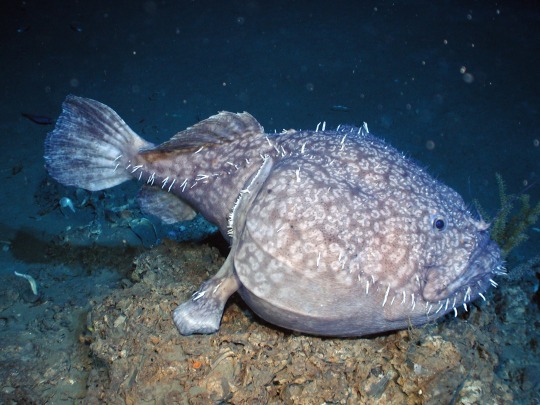
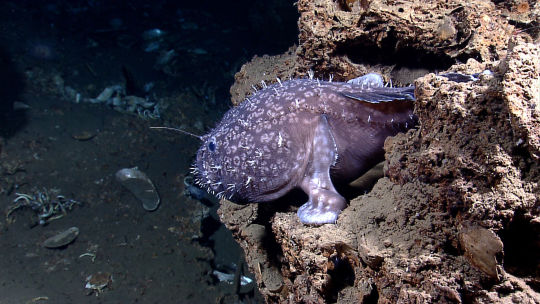
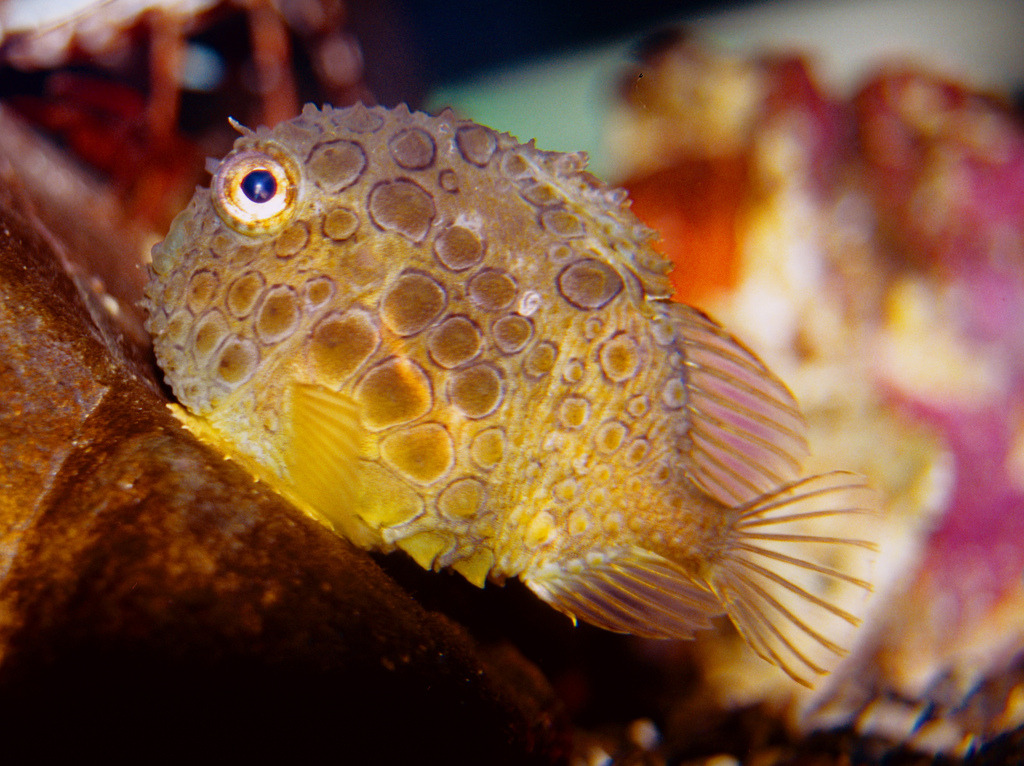
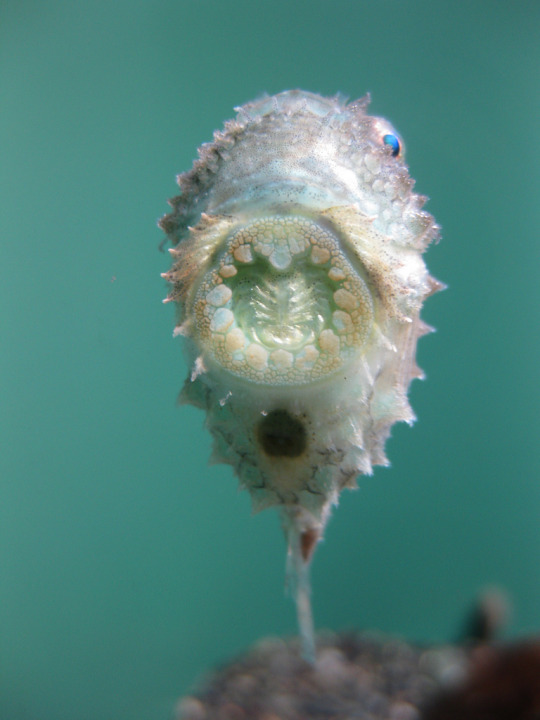
http://typhlonectes.tumblr.com/Deep Sea Goosefish (Sladenia) are anglerfish from the deep sea who lack the furious, devilish facial expressions of the classic deep sea anglerfish.They sit their podgy bodies on the sea floor, resting on four, thick fins adapted for walking.They have the classic lure for attracting prey but it isn’t luminescent.I’m sure things change when dinner comes along, but when they’re just sitting there they look like the sweetest little deep sea puppies!Images: NOAA
Ninguna ciencia, en cuanto a ciencia, engaña; el engaño está en quien no sabe. (Miguel de Cervantes)
Mostrando entradas con la etiqueta vertebrate. Mostrar todas las entradas
domingo, 23 de agosto de 2015
Deep Sea Goosefish (Sladenia)
jueves, 20 de agosto de 2015
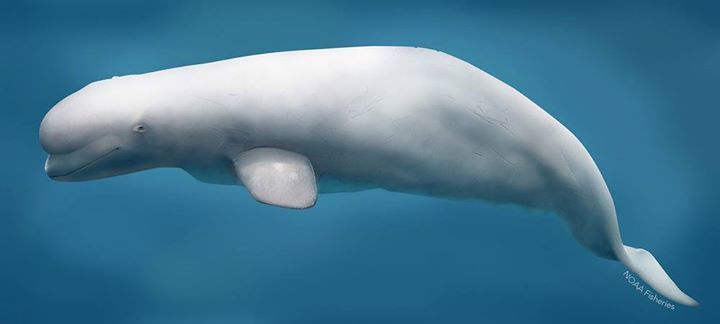
Cook Inlet Beluga Whale.
NOAA Species Spotlight: Cook Inlet Beluga Whale
Beluga whales squeal, squeak, and chirp, and it’s why sailors long ago called them “sea canaries.” This species is gregarious and small (up to 15 feet long). Of the five Alaskan stocks, the Cook Inlet beluga stock is the smallest and the most isolated from other belugas.
Cook Inlet belugas once were a valuable part of the regional Alaska Native subsistence diet, but the population has declined rapidly. This rapid decline was most likely due to unregulated subsistence harvest at a level that this small population could not sustain. The hunt has been suspended since 2005, but unfortunately the whale population has not recovered as expected.
NOAA Fisheries designated the Cook Inlet beluga whale population as depleted under the Marine Mammal Protection Act in 2000, and listed these belugas as an endangered species under the Endangered Species Act (ESA) in 2008. The rapid decline and dire status of the Cook Inlet beluga whale population makes it a priority for focusing efforts within NOAA Fisheries and with our partners to stabilize and prevent extinction of this iconic species...
martes, 11 de agosto de 2015
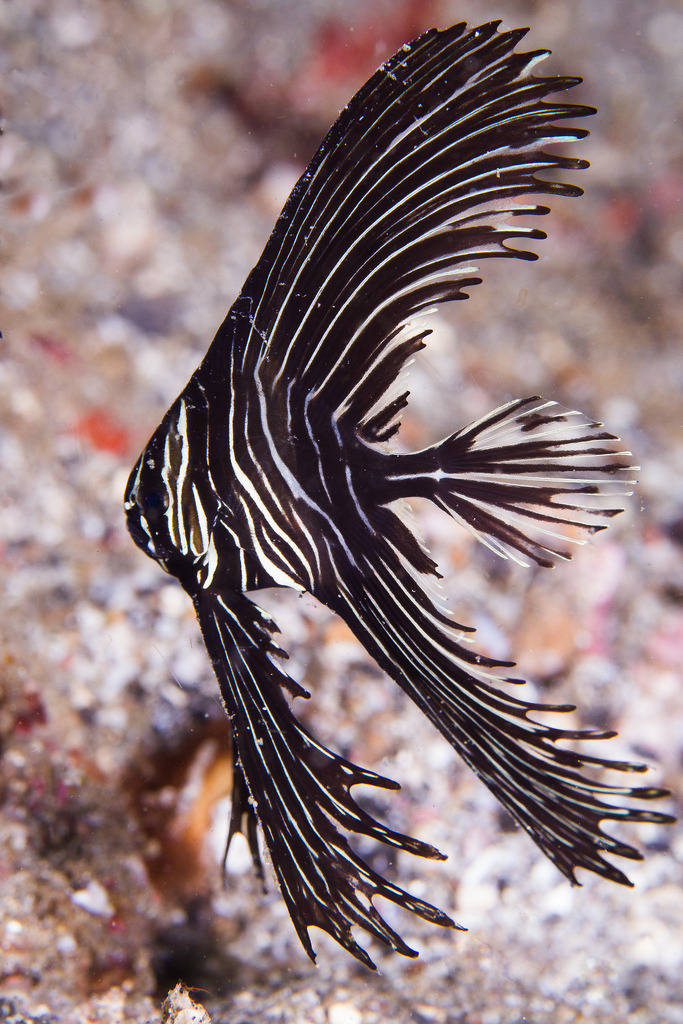
Humpback Batfish - Platax batavianus.
Humpback Batfish - Platax batavianus
Platax batavianus (Perciformes - Ephippidae) is a species of batfish which inhabits continental reefs from Madagascar to Indonesia and Australia. Juveniles of this species, like this one in the photo, are black with vertical white lines on body and fins; this zebra-pattern serves well as camouflage when sheltering with crinoids.
Adults are quite different, silvery, with only a dark bar through eye and another (faint) bar just behind head.
sábado, 8 de agosto de 2015
Pacific Spiny Lumpsucker - Eumicrotremus orbis.
peces
Pacific Spiny Lumpsucker - Eumicrotremus orbis
Some people describe the Pacific Spiny Lumpsucker, Eumicrotremus orbis (Scorpaeniformes - Cyclopteridae), as a ping-pong ball with fins, and yes it seems to be that.
Usually located in eel grass beds at night, these comical fish have a modified pelvic fin that works as a suction disk. This disk is used to attach the fish to rocks, shells and blades of eel grass. When disturbed, the fish hovers about, changing directions aimlessly like a tiny helicopter (they are very inefficient swimmers).
They are quite common, ranging from the waters off the Washington coast, up around the arc of the Aleutian Islands, to the Asian mainland and the northern islands of Japan, and in the Bering Sea.
The largest recorded Lumpsucker was five inches in length, but the most of the lumpies that divers see are about the size of a quarter.
Suscribirse a:
Entradas (Atom)