sábado, 8 de agosto de 2015

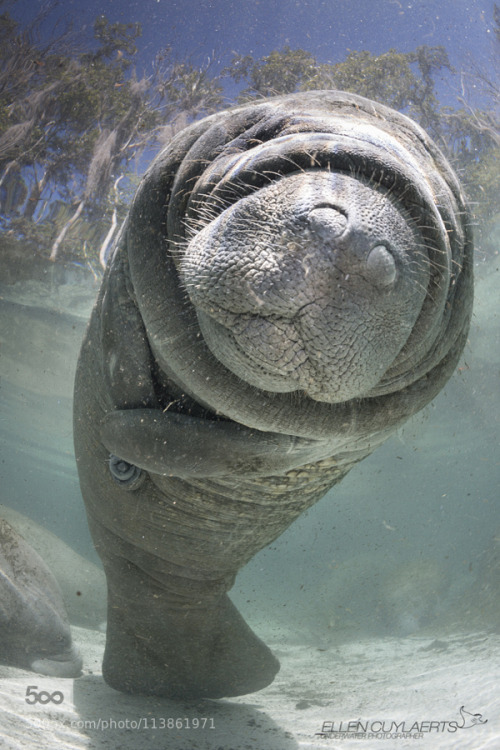
Manatees from the Gulf of Mexico

 Manatees from the Gulf of Mexico seek shelter in the springs to be able to keep their core temperature. When the water gets colder than 21 degrees celsius, they can get cold stress: their digestive system blocks and their life is in danger.
http://lifeunderthewaves.tumblr.com/image/123079309160

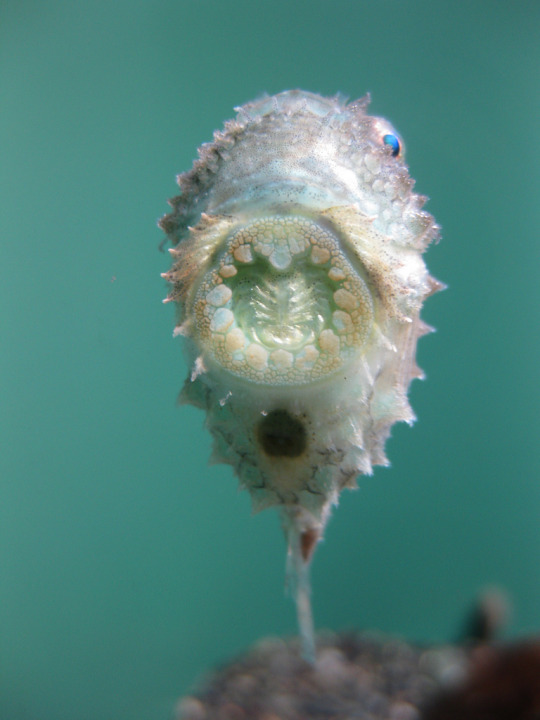
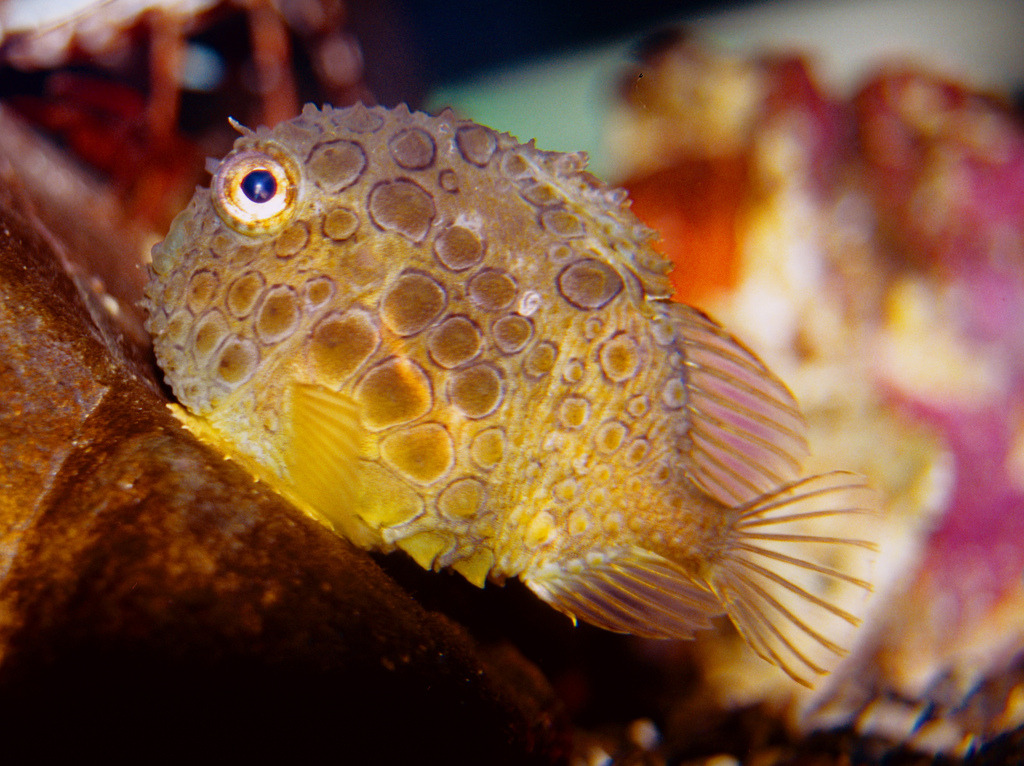
Pacific Spiny Lumpsucker - Eumicrotremus orbis.

peces
Pacific Spiny Lumpsucker - Eumicrotremus orbis
Some people describe the Pacific Spiny Lumpsucker, Eumicrotremus orbis (Scorpaeniformes - Cyclopteridae), as a ping-pong ball with fins, and yes it seems to be that. 
Usually located in eel grass beds at night, these comical fish have a modified pelvic fin that works as a suction disk. This disk is used to attach the fish to rocks, shells and blades of eel grass. When disturbed, the fish hovers about, changing directions aimlessly like a tiny helicopter (they are very inefficient swimmers).
They are quite common, ranging from the waters off the Washington coast, up around the arc of the Aleutian Islands, to the Asian mainland and the northern islands of Japan, and in the Bering Sea. 
The largest recorded Lumpsucker was five inches in length, but the most of the lumpies that divers see are about the size of a quarter.
miércoles, 5 de agosto de 2015

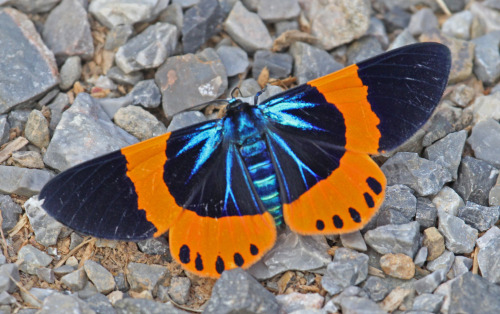
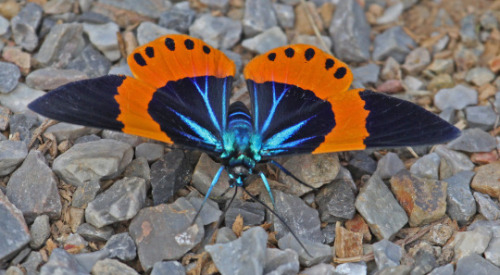
Milionia basalis pyrozona

Milionia basalis pyrozona
Milionia basalis (Geometridae) is a species of butterfly found in Japan, N.E. Himalaya, Burma and Sundaland, which occurs in a number of distinct races. The brilliant coloredM. basalis pyrozona has been recorded in Peninsular Malaysia and Burma.

martes, 4 de agosto de 2015

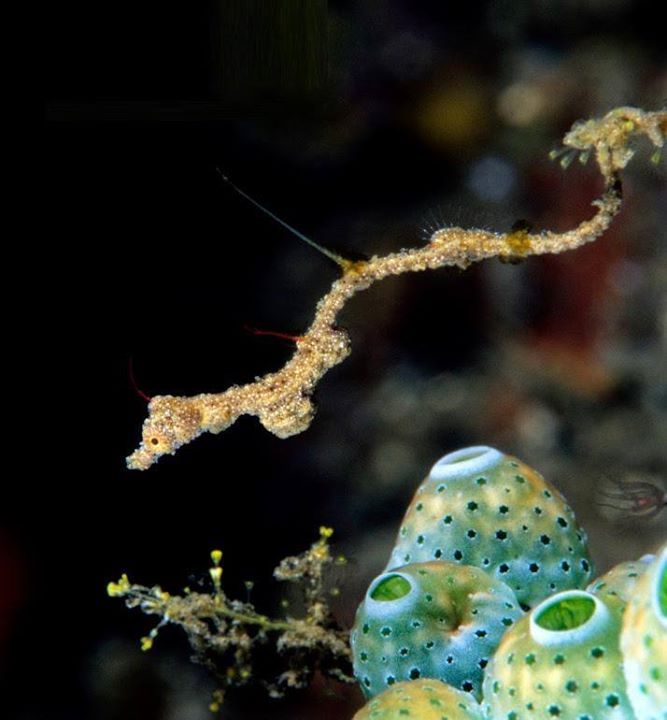
Kyonemichthys rumengani

Kyonemichthys rumengani • A New Genus and Miniature New Species of Pipehorse (Syngnathidae) from Lembeh Straits, Sulawesi, Indonesia  [2007]

Abstract: 
A new genus and species of the gasterosteiform family Syngnathidae, Kyonemichthys rumengani, is described from a single 26.8 mm TL adult female collected in Lembeh Straits, Sulawesi, Indonesia. 
It is one of the smallest members of the family relative to body mass, and resembles the pipehorse genera Acentronura, Amphelikturus and Idiotropiscis in having a short head and snout angled slightly to the axis of the body, dermal appendages and flexible tail lacking a caudal fin. 
It differs from the three most notably in having fewer trunk rings (9, versus 11-15), more tail rings (51, versus 37-46), a posteriorly positioned dorsal fin originating on the eighth tail ring (versus usually originating on the trunk, but not posteriorly farther than the second tail ring) and a uniquely swollen trunk with a medial constriction.
Source: Martin F. Gomon. 2007. aqua, International Journal of Ichthyology. 13; 25-30. (www.wakatobi.com/fishID/articles/Gomon2007AQUA13_Syngnathidae.pdf)
photograph by W. Tan

domingo, 2 de agosto de 2015

How to grow a bone - Nina Tandon

Can you grow a human bone outside the human body? The answer may soon be yes. Nina Tandon explores the possibility by examining how bones naturally grow inside the body, and illuminating how scientists are hoping to replicate that process in a lab.

Lesson by Nina Tandon, animation by Giant Animation Studios.