Mostrando entradas con la etiqueta video. Mostrar todas las entradas

viernes, 17 de febrero de 2023

What’s the best way to apologize?


“Over the years, people have come up with some truly awful apologies. From classic non-apologies to evasive excuses, and flimsy corporate promises, it’s all too easy to give a bad apology. Good apologies generally share certain elements, and considering these factors can help you make amends in a variety of situations…”

Apologies can be uncomfortable and they can take work, but a good apology—an authentic apology—requires listening, taking responsibility, and attempting to fix the situation. From TED-Ed:

“…it’s important to remember that a good apology isn’t about making you feel better. It’s about seeking to understand the perspective of the wronged party and repair the damage to your relationship.”

a starting point for communication
This TED-Ed about how to say “I’m sorry” was directed by Vitalii Nebelskyi with and-action, in collaboration with Character Lab, a nonprofit organization that gathers research-based guides and actionable advice for parents and teachers.
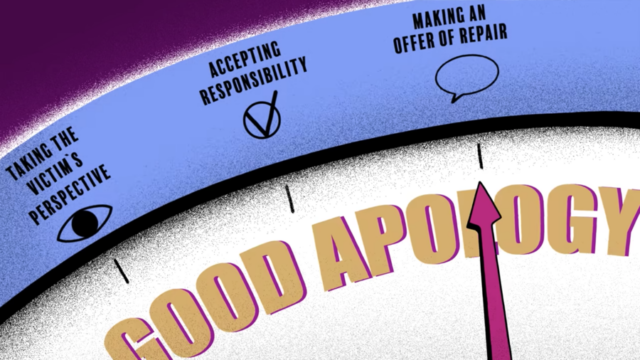
components of a good apology

jueves, 29 de septiembre de 2022

STEM out of the box MOOC: meet the teachers!

 Teachers, do you want to learn how to integrate STEM (Science, Technology, Engineering and Mathematics) in your lessons and help students develop deep scientific, mathematic, and problem-solving skills? Join this online course and learn how to introduce this way of thinking in early childhood, primary and secondary education. Help your students develop solutions to open-ended real-world problems which will engage them in the processes of scientific and higher-order thinking.

You will explore practical STEM classroom activities and ideas, rooted in real-world problems. The course will guide you through exemplary STEM lesson plans created and tested by other teachers, resources, and challenges to increase students’ knowledge and skills needed for the future. Join the course here: https://www.europeanschoolnetacademy.... -- Credits -- Thanks to all the teacher for participating in the video! In order of appearance: Ana Živković, Paraskevi Foti, Ryszard Marowicz, Peter Kane, Mirela Radosevic, Tuba Gören, Daniela Bunea, Emma Abbate and Nicoleta Livia Barbu Visuals adapted from Adobe stock images by matiasdelcarmine: https://stock.adobe.com/be_en/contrib... Music by AShamaluevMusic "Corporate Motivational Ambient" https://www.ashamaluevmusic.com/corpo... -- Disclaimer -- This course has been developed by Scientix 4 (Grant agreement N. 101000063). Scientix has received funding from the European Union’s H2020 research and innovation programme and is coordinated by European Schoolnet (EUN). The content of the document is the sole responsibility of the organizer, and it does not represent the opinion of the European Commission (EC), and the EC is not responsible for any use that might be made of information contained.

domingo, 25 de septiembre de 2022

The future jobs

 The Future of Jobs report maps the jobs and skills of the future, tracking the pace of change. It aims to shed light on the pandemic-related disruptions in 2020, contextualized within a longer history of economic cycles and the expected outlook for technology adoption, jobs and skills in the next five years.

Learn more and read the report: wef.ch/futureofjobs2020 The World Economic Forum is the International Organization for Public-Private Cooperation. The Forum engages the foremost political, business, cultural and other leaders of society to shape global, regional and industry agendas. We believe that progress happens by bringing together people from all walks of life who have the drive and the influence to make positive change.

viernes, 15 de abril de 2022

Euorpean Union protect the biodiversity


To know more about this topic you can explore the following references:
 
EU Biodiversity Strategy 2030: https://ec.europa.eu/environment/nature/biodiversity/strategy/index_en.htm


EU Environment & Legislation: https://ec.europa.eu/environment/nature/legislation/habitatsdirective/index_en.htm

EU Knowledge Center for Biodiversity: 

https://knowledge4policy.ec.europa.eu/biodiversity_en

https://www.iucn.org/news/world-commission-protected-areas/202005/conserving-nature-a-time-crisis-protected-areas-and-covid-19

EU Soil Observatory: https://ec.europa.eu/jrc/en/eu-soil-observatory

EU Parliament: https://www.europarl.europa.eu/news/en/headlines/society/20200109STO69929/biodiversity-loss-what-is-causing-it-and-why-is-it-a-concern

European Environmental Agency: https://www.eea.europa.eu/themes/biodiversity

Global Soil Biodiversity Atlas: https://esdac.jrc.ec.europa.eu/content/global-soil-biodiversity-atlas

IPBES: https://ipbes.net/global-assessment

IUCN: European Red List of endangered species:

https://www.iucn.org/regions/europe/our-work/species/european-red-list-threatened-species

https://www.europarl.europa.eu/news/en/headlines/society/20200519STO79424/endangered-species-in-europe-facts-and-figures-infographic

IUCN News: https://www.iucn.org/news/world-commission-protected-areas/202005/conserving-nature-a-time-crisis-protected-areas-and-covid-19

LIFE Programme: https://ec.europa.eu/easme/en/life

NATURA 2000 Network: https://ec.europa.eu/environment/nature/natura2000/index_en.htm

Nature and Biodiversity: https://ec.europa.eu/environment/nature/index_en.htm

EU Forest Strategy for 2030 - 3 Billion Trees: https://forest.eea.europa.eu/3-billion-trees/introduction


jueves, 31 de diciembre de 2020

 DEEP LOOK - see the unseen at the very edge of our visible world. Twice a month, get a new perspective on our place in the universe and meet extraordinary new friends. Explore big scientific mysteries by going incredibly small. DEEP LOOK is a ultra-HD (4K) short video series created by KQED San Francisco and presented by PBS Digital Studios.


A fly has a pair of tiny, dumbbell-shaped limbs called halteres that were once a second pair of wings. They wield them to make razor-sharp turns and land out of reach on your ceiling. But don't despair – there *is* a trick to smacking these infuriating insects. SUBSCRIBE to Deep Look! http://goo.gl/8NwXqt Please join our community on Patreon! https://www.patreon.com/deeplook DEEP LOOK is a ultra-HD (4K) short video series created by KQED San Francisco and presented by PBS Digital Studios. See the unseen at the very edge of our visible world. Explore big scientific mysteries by going incredibly small. --- Flies are formidable opponents, with an arsenal of tools they carry all over their bodies. For starters, their hair and antennae help a fly sense us as we walk up to them. And a fly’s eyes and tiny brain process information 10 times faster than human eyes and brains. “Compared to flies, humans are slow and sluggish creatures,” said Sanjay Sane, who researches flies at the National Centre for Biological Sciences at the Tata Institute of Fundamental Research in Bangalore, India. Once the fly escapes your swatter and is in the air, it’s in its element and your job is even tougher. Seen up close and slowed down, a fly’s aerobatics are impressive: It makes razor-sharp turns with ease and at great speed. What makes this possible is a pair of modified wings called halteres, a Greek word for dumbbell, which describes their shape. All of the 200,000 species of flies that scientists have described have a pair of halteres and a pair of wings. (That includes mosquitoes, which, wouldn’t you know it, are flies too). Most other insects – bees, butterflies, dragonflies – have four wings and no halteres. --- How do flies’ halteres work? As a fly turns, its halteres sense the rotation. In a split second, neurons at the base of the halteres send information to the fly’s muscles to steer its wings and keep its head steady. “Houseflies flap their wings about 200 times per second, which means they really only have five milliseconds to figure out what the next wingbeat is going to be like. And if you’re using vision that takes too long to do,” said Jessica Fox, who studies flies at Case Western Reserve University, in Ohio. “They really need a mechanical receptor in order to be able to sense their body rotations and correct them on the timescale that they need.” --- How do flies land and stay on the ceiling? Their halteres allow them to rotate quickly to land on the ceiling. Once they’re there, they hang upside down with tiny hooks and sticky pads on their feet. The pads, called pulvilli, have microscopic hairs that excrete a liquid that sticks to the surface. --- How do I swat a fly? “Flies process information about moving objects but they cannot process static objects, Sane explained. “Thus, the best way to approach a fly is in small, quasi-static steps such that they do not see you as a moving object.” ---+ Read the entire article on KQED Science: https://www.kqed.org/science/1971058/...

domingo, 14 de febrero de 2016

The Surprising Ways Death Shapes Our Lives


As Monty Python prophesied, “So…always look on the bright side of death / Just before you draw your terminal breath”

BrainCraft is written and hosted by Vanessa Hill for PBS Digital Studios. Talking psychology, neuroscience & why we act the way we do. 
Sound design: Joel Werner (http://joelwerner.com)
Production Assistant: Ella Colley 
Thanks to Jason Goldman, Anna and Joe for their help filming this episode. 

viernes, 12 de febrero de 2016

How Old Are You, Really?


I first heard about this story on RadioLab in their Elements episode: http://www.radiolab.org/story/elements/ It blew my mind. Go listen, it’s an awesome collection of stories.

BrainCraft is created and hosted by Vanessa Hill and brought to you by PBS Digital Studios. Talking psychology, neuroscience & why we act the way we do. 
Sound design: Joel Werner (http://joelwerner.com)
Production Assistant: Ella Colley 

miércoles, 10 de febrero de 2016

Are Concussions Deadly?


BrainCraft is created by Vanessa Hill (@nessyhill) and brought to you by PBS Digital Studios. Talking psychology, neuroscience & why we act the way we do. 
Sound design: Joel Werner (http://joelwerner.com)
Camera/Production Assistant: Kula Mahanta 
Written, animated and edited by Vanessa Hill

domingo, 16 de agosto de 2015

The Chemistry of Summer’s Pretty Insect.

As fireflies are delighting children across the country with their nighttime displays, scientists are closing in on a better understanding of how the insects produce their enchanting glow. They report in the Journal of the American Chemical Society new evidence of how the beetles’ chemistry works. Read more about this exciting discovery at:
http://pubs.acs.org/doi/abs/10.1021/jacs.5b03820


domingo, 2 de agosto de 2015

How to grow a bone - Nina Tandon

Can you grow a human bone outside the human body? The answer may soon be yes. Nina Tandon explores the possibility by examining how bones naturally grow inside the body, and illuminating how scientists are hoping to replicate that process in a lab.

Lesson by Nina Tandon, animation by Giant Animation Studios.

martes, 30 de junio de 2015

What's invisible? More than you think - John Lloyd

View full lesson on ed.ted.com http://ed.ted.com/lessons/what-s-invi...

Gravity. The stars in day. Thoughts. The human genome. Time. Atoms. So much of what really matters in the world is impossible to see. A stunning animation of John Lloyd's classic TEDTalk from 2009, which will make you question what you actually know.

Lesson by John Lloyd, animation by Cognitive Media.

domingo, 28 de junio de 2015

Cell vs. virus: A battle for health - Shannon Stiles.

View full lesson: http://ed.ted.com/lessons/cell-vs-vir...

All living things are made of cells. In the human body, these highly efficient units are protected by layer upon layer of defense against icky invaders like the cold virus. Shannon Stiles takes a journey into the cell, introducing the microscopic arsenal of weapons and warriors that play a role in the battle for your health.

Lesson by Shannon Stiles, animation by Igor Coric.

viernes, 26 de junio de 2015

How we conquered the deadly smallpox virus - Simona Zompi

View full lesson: http://ed.ted.com/lessons/how-we-conq...

For 10,000 years, humanity suffered from the scourge of smallpox. The virus killed almost a third of its victims within two weeks and left survivors horribly scarred. But Simona Zompi commends the brave souls -- a Buddhist nun, a boy, a cow, a dairymaid and physician Edward Jenner -- who first stopped the spread of this disastrous disease, to make us smallpox-free today.

Lesson by Simona Zompi, animation by Augenblick Studios.


domingo, 21 de junio de 2015

Measles Explained — Vaccinate or Not?


Everybody is talking about Measles – but what does the virus actually do in the body? Is it really so harmful that you need a vaccination? We go deep into the body of an infected person and see what Measles does and how the immune system reacts to it!


Videos, explaining things. Like evolution, time, space, global energy or our existence in this strange universe. 
We are a team of designers, journalists and musicians who want to make science look beautiful. Because it is beautiful. 

You can get the MUSIC from this video here: 

https://soundcloud.com/epicmountain/m...

http://epicmountainmusic.bandcamp.com...

http://www.epic-mountain.com


Visit us on our Website, Twitter, Facebook, Patreon or Behance to say hi!

http://kurzgesagt.org
https://www.facebook.com/Kurzgesagt
https://twitter.com/Kurz_Gesagt
http://www.patreon.com/Kurzgesagt
http://www.behance.net/Kurzgesagt

Measles Explained — Do You Really Need To Vaccinate?

THANKS A LOT TO OUR LOVELY PATRONS FOR SUPPORTING US:

Andrzej Rejman, Joseph McKnight, Andrew Jagasothy, Stephen Bassett, Raphael Hviding, Sam Elitzer, Eric, Jordan Gardner,
Jeff Le, Devir Islas, Kirstie,Francesca Monteiro, Duncan Cheong,Derek, Juan Manuel Corredor,Osric Lord-Williams,Jesse Järvi, Scott Zell, AgentK, Mehmet Sevil, Carly Tawse, [ K A I ] = 石 : :, Kevin Dam, Neelfyn, Charlie, Nat Ryall,Christopher Lang, Nicholas Holtz, Tony Morley, Jónatan Nilsson, Zr4g0n, Jeroen Koerts, Tanya Smirnova, Patrick Eyrich, Manuel Auer, J.J., Chris Linardos,Cody, trefmanic, Dean Herbert, Adam Smith,David Garcia Quintas, Gaëtan Duvaux,Caroline Andrewes, Tom Alexander Kutil, Alex Kaplan, Vincent, Okan, Sasha C, Marcelo, KokLiang Lim, Mikel De Uranga,Matthew Gill,Alexander Heavens, Fluffy19, Adam Primaeros, Jan Schmid, Sara Shah, Michal, Eduardo Barbosa,maarten ligtenberg, Ozan, Ghitea Andrei Paul, Ryan, Malthe Agger, Larry Bunyard, Josh Maleszewski, Isaac, Volodymyr Khomenko, Sebastian Laiseca, Chase Gotlieb, Giovanna Cardoso, Eric Austin, Enrico, Theo Alves Monteiro, Tony Montuori,
David Davenport-Firth, Hamad, Michael Ren, Andrew Connor, Vaelohs, Peter Schuller,Brandy Alexander, Alexander Kosenkov, Scott Laing, Eric, Gizem Gürkan, George Chearswat, Brandon Liu, oscar gautama, Philip Freeman, Tim, Bruno Araújo, Carlos Bohorquez, David Harbinson, Daniel OCL, Rikard Nyberg, Lethargicpanda, Florian Guitton, Jezariael Demos, Mark Scheurwater, Ajay Shekhar, Ryan Nai, Jon Moroney, Eugene Cham, Renaud Savignard, James, Nick Yonge, Pranab Shenoy, Terry Lipstein, Ryan, somersault18:24, Tim Carll, Ben Shackman,
Jan Berdel,Lucas Lohr, Sieglinde Geisel, Javier de la Garza, Peter Žnuderl, Clayton Fussell, Rory Bennett, Daniel Gonzalez, Stephen Joseph DCruz, Jeff Churchill, Dan Q, Jonathan Velazquez Gore, Daniel, Pol Lutgen, Seona Tea, Morten, Thomas Lee, Finn Edwards. David Taylor, Alan Feyaerts, Jesse MacLean, Matt Collins, Corbin, Fabricio Godoy, Charles Kuang, Maximilian Ritter, Yousif, Jesse Powell, Praveen Muthu, Bahjat, Mike Mintz,
Jem Arnold, Wei Wong, Jon Davis, Steffen Weng, Lars Vas Dias, Igor Benicio de Mesquita, Siddharth Bajaj, Eli Fisker, Greeny Liu, Tibor Schiemann, Andres Montoya, dante harper, Bünyamin Tetik, Joe Pond, Gustavo, Stephen Morse, Jørgen Smalås,Tommi Mansikka, Evan Low, Muath, Dario Wünsch, Edgar Duarte Ortega, Matthew Macomber, Stephen, Alipasha Sadri, Daniel McCouid-Carr, Kevin P, Ziggy Freed, Steven Ratner, Brucelow, José,
Philipp Weber, Brad Wardell, Alexander Scheffer


Measles Explained — Do You Really Need To Vaccinate?

jueves, 18 de junio de 2015

The Immune System Explained I – Bacteria Infection.

Every second of your life you are under attack. Bacteria, viruses, spores and more living stuff wants to enter your body and use its resources for itself. The immune system is a powerful army of cells that fights like a T-Rex on speed and sacrifices itself for your survival. Without it you would die in no time. This sounds simple but the reality is complex, beautiful and just awesome. An animation of the immune system.

We are thinking of making an App for tablets out of this video. Would you like that? Did you think the visual system we developed worked? Feedback is much appreciated!

You can get the MUSIC of the video here: http://thomasveith.bandcamp.com/track...

Videos, explaining things. Like evolution, time, space, global energy or our existence in this strange universe. 
We are a team of designers, journalists and musicians who want to make science look beautiful. Because it is beautiful. 

Visit us on our Website, Twitter, Facebook, Patreon or Behance to say hi!

https://www.facebook.com/Kurzgesagt
https://twitter.com/Kurz_Gesagt
http://kurzgesagt.org
http://www.patreon.com/Kurzgesagt
http://www.behance.net/kurzgesagt

THANKS A LOT TO OUR PATRONS FOR SUPPORTING US:

Justin Degenaars
jordan gardner
Derek Loa
Jeroen Koerts
Carlos Campuzano
Benoît Graham
Scott Zell
Tanya Smirnova
Giovanna Cardoso
Patrick Eyrich
Alex Kaplan
Chris Dudley
Deanie Adams
Caroline Andrewes
Dean Herbert
Rory Bennett
Adam Primaeros
Rasmus Lind
Daniel O.C.L.
Dylan Hoffer
Maxl Heitsch
Eliud Vasquez
Neve Laughery
Ghitea Andrei Paul
Alexander Law McCormack Heavens
Eduardo Barbosa
Sara Shah 
Dario Pagnia 
Chris Doughty 
Evan Low 
Stephen Morse
Bünyamin Tetik
Romano Casellini
dante harper
Justin T.
Greeny Liu 
Siddharth Bajaj 
Valerie Brunet 
Jen 
Tim 
Peter Wagner 
Yousif
Efe Melih Polat
Gaëtan
Maximilian Ritter
Charles Kuang 
Balazs-Hegedus Jozsef
Petr Pilař
Finn Edwards
Thomas Lee
Daniel Fuchs
Pascal B.
Seona Tea
Pol Lutgen
Roman Zolotorevich
Daniel 
Jonathan Velazquez Gore
Jeff "Church" Churchill
Randy Knapp
Brandon Liu
Peter Žnuderl
Swarochisha Kandregula
Javier de la Garza
Jan Lukas Lehmann 
somersault18:24

Why you are still alive - The immune system explained

lunes, 15 de junio de 2015

Everything You Need to Know About Adderall

From its history to its application, get the low down on the drug.
The drug is used to treat narcolepsy, depression and attention deficit and hyperactivity disorder (ADHD). But how does amphetamine, the active ingredient in Adderall™, work?


More than 25 million people rely on Adderall™ and other similar drugs to help treat narcolepsy, depression and attention deficit and hyperactivity disorder (ADHD). But how does amphetamine, the active ingredient in Adderall™, work? This week, Reactions explains how amphetamine helps you focus. 

Find us on all these places:
Subscribe! http://bit.ly/ACSReactions
Facebook! http://facebook.com/ACSReactions
Twitter! http://twitter.com/ACSReactions
Tumblr! http://tumblr.com/ACSReactions

Cadillac Candy, Optimistic Ballroom, and Like That provided by AudioMicro

Producer: Elaine Seward

Scientific consultants:
Tien Nguyen, Ph.D.
Ryan Davison, Ph.D.
Darcy Gentlemen, Ph.D.

Writers: 
Tien Nguyen, Ph.D.
Elaine Seward
Noel Waghorn

Executive Producer: 
Adam Dylewski

miércoles, 10 de junio de 2015

4 Ways space is trying to kill you.

Our planet does a pretty good job of protecting us from space. Which is awfully nice of it, because space is trying to kill us.

miércoles, 3 de junio de 2015

How Does Moisturizer Work?

How Does Moisturizer Work?
cold weather of winter can also mean dry, cracked skin. Many reach for the moisturizer to keep their skin soft, but how do these products actually work? Before you head to the beauty aisle.

sábado, 23 de mayo de 2015

Brain Tricks - This Is How Your Brain Works

Ever wonder how your brain processes information? These brain tricks and illusions help to demonstrate the two main systems of Fast and Slow Thinking in your brain. 

Written and created by Mitchell Moffit (twitter @mitchellmoffit) and Gregory Brown (twitter @whalewatchmeplz).

TWITTER: http://www.twitter.com/AsapSCIENCE
FACEBOOK: http://www.facebook.com/AsapSCIENCE

miércoles, 20 de mayo de 2015

How does your brain respond to pain? - Karen D. Davis

Everyone experiences pain -- but why do some people react to the same painful stimulus in different ways? And what exactly is pain, anyway? Karen D. Davis walks you through your brain on pain, illuminating why the "pain experience" differs from person to person. 

Lesson by Karen D. Davis, animation by Brett Underhill.