
Mostrando entradas con la etiqueta Infographic. Mostrar todas las entradas
Mostrando entradas con la etiqueta Infographic. Mostrar todas las entradas
jueves, 7 de julio de 2016


sábado, 18 de junio de 2016

lunes, 23 de mayo de 2016

lunes, 15 de febrero de 2016
sábado, 2 de enero de 2016
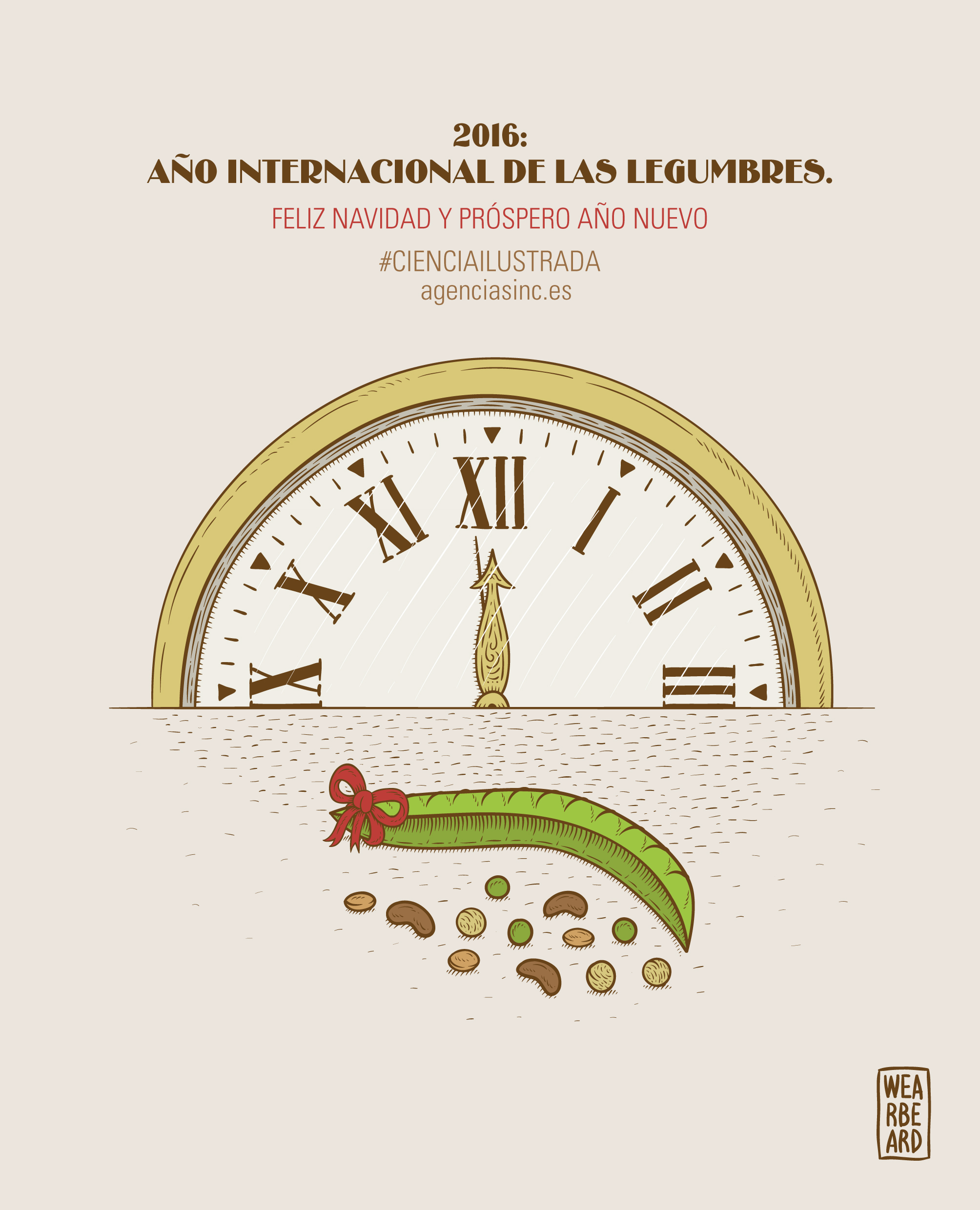
Año Internacional de las legumbres 2016
Se acerca el nuevo año y aunque la mayoría de los españoles celebrarán su entrada con las tradicionales doce uvas puede que doce lentejas fueran más adecuadas. 2016 ha sido declarado el Año Internacional de las Legumbres por la Organización de las Naciones Unidas (ONU).
Ricos en proteínas y minerales, estos cultivos no solo contribuyen a cuidar la salud de las personas, sino también la del medio ambiente. Sus características, entre las que se incluyen una huella reducida de desperdicio alimentario y la mejora de la fertilidad de los suelos, han hecho que lentejas, frijoles y otros cientos de legumbres sean merecedoras de este honor.
Con su mención, la ONU pretende concienciar de la importancia de las leguminosas, que forman parte de nuestra dieta desde hace siglos y son indispensables para las comunidades vulnerables de países en desarrollo.
Además, en un momento en el que la lucha contra el cambio climático se ha convertido en una prioridad, las legumbres pueden ser uno de nuestros mayores aliados. Su capacidad de fijar el nitrógeno biológicamente y su diversidad genética que permite sembrar variedades mejoradas contribuyen al desarrollo de una agricultura sostenible.
viernes, 1 de enero de 2016

lunes, 28 de diciembre de 2015

jueves, 24 de diciembre de 2015

miércoles, 23 de diciembre de 2015

jueves, 15 de octubre de 2015

martes, 8 de septiembre de 2015

viernes, 17 de julio de 2015

martes, 14 de julio de 2015
HOW THE WORLD WASTES FOOD [INFOGRAPHIC]

Every year, the planet loses nearly a third of its food—a staggering 1.4 billion tons. That’s according to a 2011 United Nations study that assessed food networks in 152 countries. The researchers’ results reveal where in the food-supply chain farmers, engineers, and consumers might more effectively get comestibles into mouths.
What to do about it
The planet may have to feed a global population of 10 billion people by 2050. With that milestone looming, organizations like the U.N., the Natural Resources Defense Council, and Food Tank are working on ways to make food systems more efficient.
Agriculture
Problem: Agricultural loss particularly plagues industrialized nations, where farmers often need to overproduce in order to guarantee a steady supply to grocery stores.
Solution: With better food labeling—for example, using a spoils-on date rather than a sell-by date—markets could keep their stock longer and ease demand on farmers.
Solution: With better food labeling—for example, using a spoils-on date rather than a sell-by date—markets could keep their stock longer and ease demand on farmers.
Post-harvest
Problem: Food loss after harvest is a bigger problem in developing countries—where food infrastructure is often less modernized—than in industrialized ones.
Solution: Improving roads would enable unrefrigerated perishables to reach market faster, cutting down on spoilage. Investment in cold-storage facilities would also prevent losses.
Solution: Improving roads would enable unrefrigerated perishables to reach market faster, cutting down on spoilage. Investment in cold-storage facilities would also prevent losses.
Processing
Problem: Developing countries lose the most fruits and vegetables at the processing stage because it’s expensive to maintain facilities big enough to handle large seasonal influxes.
Solution: If the owners of processing facilities enter into contracts with individual farmers before they sow seeds, the timing and size of the harvest may be more predictable and manageable.
Solution: If the owners of processing facilities enter into contracts with individual farmers before they sow seeds, the timing and size of the harvest may be more predictable and manageable.
Distribution
Problem: If a supermarket rejects food once it leaves a processing plant—say, for having too many tomatoes already—the truck driver may not be able to find another buyer before the food spoils.
Solution: New mobile-phone apps, including one called Food Cowboy, help drivers locate nearby food banks that might take the shipment.
Solution: New mobile-phone apps, including one called Food Cowboy, help drivers locate nearby food banks that might take the shipment.
Consumption
Problem: At the last stage, consumers in industrialized countries waste five times as much food as those in developing ones. In the U.S., that means 35 million tons of food each year head to landfills and incinerators.
Solution: In the U.K., a public-awareness campaign cut household losses by 20 percent, by encouraging actions such as taking more frequent shopping trips to prevent groceries from spoiling.
Solution: In the U.K., a public-awareness campaign cut household losses by 20 percent, by encouraging actions such as taking more frequent shopping trips to prevent groceries from spoiling.
_Data used to develop this graphic come from the U.N. Food and Agriculture Organization (FAO) report ©FAO 2011 “Global Losses and Food Waste,” part of the Save Food initiative. _
THE FUTURE OF FOOD PRESERVATION
To tackle food waste, the U.S. Department of Agriculture and partner Worrell Water Technologies developed a one-square-inch packet that extends the refrigerated life of fruits and vegetables by up to five weeks. Each permeable packet contains Curoxin vapor, a proprietary disinfectant that releases slowly inside a clamshell container and envelops fresh food in an antimicrobial cloud. The effect? Water loss and fungal growth are significantly arrested, which maintains produces’ firmness, color, and taste. Currently in trials, Curoxin should be available in 2015. —MATT JANCER
domingo, 16 de febrero de 2014
7 Unexpected Ingredients You Might Be Eating For Lunch Today
Have you enjoyed any juice from a beaver’s butt lately? If you’ve been drinking any fruit-flavored drinks, then the chances are that you have. Castoreum, which is extracted from a beaver’s anal glands, is used to make artificial raspberry flavoring. Products using this flavoring include cheap ice cre...

lunes, 10 de febrero de 2014

martes, 4 de febrero de 2014
Evolución de los perros.
This infographic poster explains how dogs made their evolution to become the different types of breeds that we know today.

viernes, 31 de enero de 2014
50 Cosas increíbles sobre la Tierra.
Earth is an amazing planet but the majority of us tend to take for granted. From deep underground to outer space, there is something to capture everyone's imagination. Our infographic offers 50 fascinating facts about our planet.

miércoles, 29 de enero de 2014
5 largest meteorites on Earth.
Share this infographic on your website: http://behealthy24.com/infographics/5meteorites.php Did you know that up to 4,000,000,000 meteoroids fall to our planet every single day. Most of them burn in the Earth's atmosphere, however, some of them impact with the surface.

lunes, 27 de enero de 2014
Timeline of the Far Future
First, we brought you a prediction of the forthcoming year. Then we brought you a timeline of the near future, revealing what could happen up to around 100 years time. But here’s our most ambitious set of predictions yet – from what could happen in one thousand years time to one hundred quintillion years (that’s 100,000,000,000,000,000,000 years). As the song says, there may be trouble ahead...

sábado, 25 de enero de 2014

Suscribirse a:
Entradas (Atom)