Mostrando entradas con la etiqueta vídeo. Mostrar todas las entradas
Mostrando entradas con la etiqueta vídeo. Mostrar todas las entradas
lunes, 8 de noviembre de 2021
Algunos efectos clave del cambio climático:
Climate Change is a real and serious issue. In this video Bill Nye, the Science Guy, explains what causes climate change, how it affects our planet, why we need to act promptly to mitigate its effects, and how each of us can contribute to a solution.➡ Subscribe: http://bit.ly/NatGeoSubscribe ➡ Get More 101 Videos: http://bit.ly/NatGeo101 About National Geographic’s 101 Series: Explore and experience the forces that shape the world around us. Get More National Geographic: Official Site: http://bit.ly/NatGeoOfficialSite Facebook: http://bit.ly/FBNatGeo Twitter: http://bit.ly/NatGeoTwitter Instagram: http://bit.ly/NatGeoInsta About National Geographic: National Geographic is the world's premium destination for science, exploration, and adventure. Through their world-class scientists, photographers, journalists, and filmmakers, Nat Geo gets you closer to the stories that matter and past the edge of what's possible. Climate Change 101 with Bill Nye | National Geographic https://youtu.be/EtW2rrLHs08 National Geographic https://www.youtube.com/natgeo


domingo, 7 de noviembre de 2021
¿Qué causa la crisis climática?
In this whiteboard animation, I present 6 unexpected connections I have found between the coronavirus and sustainability, the environment and climate change. This video is about white-footed mice, speaking trees, opossums, humans and how our encroachment on nature increases the risks of a pandemic and decreases the capacity of the earth to sustain us. ** I create engaging sustainability videos to learn & teach. More sustainability videos on www.sustainabilityillustrated.com & http://www.youtube.com/learnsustainab... Help us create more videos like this by becoming a patron: http://www.patreon.com/sustainability Subscribe to receive the latest videos: http://alturl.com/jc8u6 Sign up to my mailing list: https://mailchi.mp/7080080f1218/susta... Videos are created by Alexandre Magnin using years of experience drawing and working as a sustainability consultant with businesses and communities: http://www.amcreative.org Twitter: http://twitter.com/Sustain_Illustr Facebook: http://www.facebook.com/sustainabilit... LinkedIn: https://www.linkedin.com/in/alexandre... ** Articles: https://www.vox.com/future-perfect/20... https://insideclimatenews.org/news/24... https://inews.co.uk/news/environment/... https://www.carbonbrief.org/analysis-... Music & sound effects from https://www.epidemicsound.com/ Herd Of Cows Mooing by tdes on https://freesound.org Photos: Ashim D’Silva on Unsplash ChadoNihi and 272447 on Pixabay Amazon forest by NASA
¿Qué causa la crisis climática?
Como vimos en el vídeo de la sección anterior, las actividades humanas han comenzado a modificar cada uno de los cuatro componentes que generan el clima de la Tierra:
- la atmósfera (el aire que respiramos);
- la hidrosfera (el agua del planeta);
- la criosfera (las capas de hielo y los glaciares), y
- la biosfera (las plantas y animales del planeta).
Las causas de la crisis climática se superponen en gran medida con las causas conocidas de las pandemias, como la que actualmente estamos en medio. El siguiente video resume muy bien los puntos hechos por la periodista científica Sonia Shah.
Para obtener más información sobre las causas de la crisis climática, eche un vistazo a este sitio web educativo https://climatekids.nasa.gov/menu/big-questions/
desarrollado por la NASA, que ofrece respuestas directas y amigables para los niños a grandes preguntas. También puede encontrar una increíble variedad de juegos, actividades y otros recursos para enseñar a los niños de todas las edades sobre los sistemas de la Tierra, el ciclo del agua, el tiempo y el clima
sábado, 11 de febrero de 2017
Resuelve con creatividad. Trabajo.
El problema que he elegido para este trabajo de #CreatividadEnRed es la realización de un vídeo sobre la visita que realizamos al Museo Oceanografico de Valencia.
Se valorará con esta rubrica
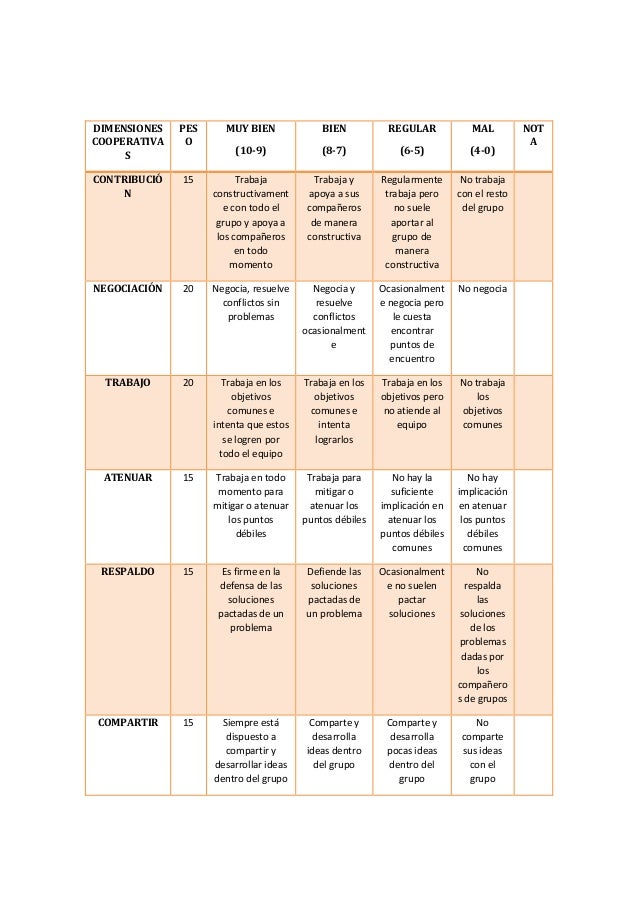
Se valorará con esta rubrica
Y este es el diseño del trabajo que los alumnos deben hacer.
martes, 5 de abril de 2016
martes, 10 de noviembre de 2015
Murciélagos.
It’s Bat Week – a week dedicated to celebrating the importance of bats! Far from scary, these little creatures are super helpful! Bats act as pollinators and are also natural pest control. How can you help bats? Build a bat box for your yard to provide bats with a safe home. Check out more cool facts at http://on.doi.gov/1iifb4k
Gracias a http://americasgreatoutdoors.tumblr.com/
domingo, 11 de octubre de 2015
viernes, 21 de agosto de 2015
Light technologies mystery - with the thrilling conclusion!
Think you've solved the mystery of the professor's disappearance? Well, here's the conclusion, by popular vote!
http://nationalsciencefoundation.tumblr.com/
Visit NSF.gov/light to learn about the fundamental science and engineering discoveries that make these tools and future technologies possible.
Here’s our story so far: An astronomer at a world-class observatory is last seen burning the midnight optics when he suddenly goes missing. A forensic duo equipped with the latest light-based technologies arrives on the scene to investigate. An infrared temperature sensor and room-mapping lasers provide clues, while evidence is bagged and tracked with barcodes. High-speed communication networks powered by fiber optics allow investigators to transmit their findings and obtain additional information as needed. Finally, a forensic holodeck puts it all together and reveals the fate of the professor…
http://nationalsciencefoundation.tumblr.com/
Visit NSF.gov/light to learn about the fundamental science and engineering discoveries that make these tools and future technologies possible.
Here’s our story so far: An astronomer at a world-class observatory is last seen burning the midnight optics when he suddenly goes missing. A forensic duo equipped with the latest light-based technologies arrives on the scene to investigate. An infrared temperature sensor and room-mapping lasers provide clues, while evidence is bagged and tracked with barcodes. High-speed communication networks powered by fiber optics allow investigators to transmit their findings and obtain additional information as needed. Finally, a forensic holodeck puts it all together and reveals the fate of the professor…
viernes, 27 de febrero de 2015
What Does A Cancer Cell Look Like?
Cells are tiny, but what they can reveal about our health is profound. UCLA's Amy Rowat is investigating the texture and squishiness of cells in our body, which can have a huge impact on treatments for cancer and genetic disorders. She explains the mechanics of a cell and describes the teeny, tiny instruments she's created to study them.
FEATURING: Amy Rowat, Assistant Professor, UCLA Department of Integrative Biology & Physiology.
FEATURING: Amy Rowat, Assistant Professor, UCLA Department of Integrative Biology & Physiology.
martes, 24 de febrero de 2015
We Are Built To Be Kind.
Greed is good. War is inevitable. Whether in political theory or popular culture, human nature is often portrayed as selfish and power hungry. UC Berkeley psychologist Dacher Keltner challenges this notion of human nature and seeks to better understand why we evolved pro-social emotions like empathy, compassion and gratitude.
We've all heard the phrase 'survival of the fittest', born from the Darwinian theory of natural selection. Keltner adds nuance to this concept by delving deeper into Darwin's idea that sympathy is one of the strongest human instincts — sometimes stronger than self-interest.
FEATURING: Dacher Keltner, professor of psychology and founding faculty director of the Greater Good Science Center at UC Berkeley
We've all heard the phrase 'survival of the fittest', born from the Darwinian theory of natural selection. Keltner adds nuance to this concept by delving deeper into Darwin's idea that sympathy is one of the strongest human instincts — sometimes stronger than self-interest.
FEATURING: Dacher Keltner, professor of psychology and founding faculty director of the Greater Good Science Center at UC Berkeley
sábado, 21 de febrero de 2015
Is Sugar in Fruit Different Than Sugar in Soda?
How does the sugar in fruit compare to the sugar in processed foods like soda or cookies?
Everyone loves a sweet treat, but on average, Americans eat nearly 66 pounds of added sugar per person per year. It's easy to exceed the daily recommended sugar intake when a 12 oz soda has about 11 teaspoons of added sugar. But what about the sugar in fruit? Should people be worried about how much fruit they're eating? Dr. Kimber Stanhope, a Nutritional biologist at UC Davis, walks us through the science.
Everyone loves a sweet treat, but on average, Americans eat nearly 66 pounds of added sugar per person per year. It's easy to exceed the daily recommended sugar intake when a 12 oz soda has about 11 teaspoons of added sugar. But what about the sugar in fruit? Should people be worried about how much fruit they're eating? Dr. Kimber Stanhope, a Nutritional biologist at UC Davis, walks us through the science.
miércoles, 18 de febrero de 2015
domingo, 15 de febrero de 2015
jueves, 12 de febrero de 2015
Gravity Visualized
Dan Burns explains his space-time warping demo at a PTSOS workshop at Los Gatos High School, on March 10, 2012. Thanks to Shannon Range from the Gravity Probe B program for creating the original demonstration which he shared with Dan in 2004.
Information on how to make your own Spacetime Simulator can be found here:
Information on how to make your own Spacetime Simulator can be found here:
lunes, 9 de febrero de 2015
viernes, 6 de febrero de 2015
Vida en una gota de agua.Life in a Drop of Water.
Hundreds, even thousands, of fascinating organisms can be found in a single drop of pond water. Most are microscopic in size, and they include bacteria, protozoa, metazoa, diatoms, algae, and many others. Incredible close-up photography features dozens of these amazing life forms, including amoeba, paramecia, euglena, rotifers, water bears, and many more. While these organisms may appear strange, they actually have a lot in common with you and me. Students will learn not only how to identify some of the more common species, but they will also find out how to collect and maintain their own cultures. This program provides an excellent introduction to the study of simple, single-celled and multi-cellular organisms.
lunes, 12 de enero de 2015
jueves, 8 de enero de 2015
The Invisible World
We are all surrounded by microorganisms, they live on us within us and around us, they affect everything we do, yet most people have no idea what they look like. Using the latest technology it is possible to see into this normally invisible world.
martes, 6 de enero de 2015
Microorganisms: "Microscopic Life: The World of the Invisible"
"A study of the plant and animal life found in a jar of ordinary pond water. Illustrates and explains the difference between microscopic plants and animals; between one-celled and many-celled organisms; the meaning of colonial organization; and the various processes of food-gathering, digestion and reproduction."
Public domain film from the Library of Congress Prelinger Archive, slightly cropped to remove uneven edges, with the aspect ratio corrected, and mild video noise reduction applied.
The soundtrack was also processed with volume normalization, noise reduction, clipping reduction, and/or equalization (the resulting sound, though not perfect, is far less noisy than the original).
http://en.wikipedia.org/wiki/Microscope
A microscope (from the Greek: μικρός, mikrós, "small" and σκοπεῖν, skopeîn, "to look" or "see") is an instrument used to see objects that are too small for the naked eye. The science of investigating small objects using such an instrument is called microscopy. Microscopic means invisible to the eye unless aided by a microscope.
There are many types of microscopes, the most common and first to be invented is the optical microscope which uses light to image the sample. Other major types of microscopes are the electron microscope (both the transmission electron microscope and the scanning electron microscope) and the various types of scanning probe microscope...
History
The first microscope to be developed was the optical microscope, although the original inventor is not easy to identify. An early microscope was made in 1590 in Middelburg, Netherlands. Two eyeglass makers are variously given credit: Hans Lippershey (who developed an early telescope) and Zacharias Janssen. Giovanni Faber coined the name microscope for Galileo Galilei's compound microscope in 1625 (Galileo had called it the "occhiolino" or "little eye").
Rise of modern light microscopy
The first detailed account of the interior construction of living tissue based on the use of a microscope did not appear until 1644, in Giambattista Odierna's L'occhio della mosca, or The Fly's Eye.
It was not until the 1660s and 1670s that the microscope was used extensively for research in Italy, The Netherlands and England. Marcelo Malpighi in Italy began the analysis of biological structures beginning with the lungs. Robert Hooke's Micrographia had a huge impact, largely because of its impressive illustrations. The greatest contribution came from Antonie van Leeuwenhoek who discovered red blood cells and spermatozoa and helped popularise microscopy as a technique. On 9 October 1676, Van Leeuwenhoek reported the discovery of micro-organisms.
In 1893 August Köhler developed a key technique for sample illumination, Köhler illumination, which is central to modern light microscopy. This method of sample illumination gives rise to extremely even lighting and overcomes many limitations of older techniques of sample illumination. Further developments in sample illumination came from Fritz Zernike in 1953 and George Nomarski 1955 for their development of phase contrast and differential interference contrast illumination which allow imaging of transparent samples...
http://en.wikipedia.org/wiki/Microorg...
A microorganism (from the Greek: μικρός, mikrós, "small" and ὀργανισμός, organismós, "organism"; also spelled micro-organism, micro organism or microörganism) or microbe is a microscopic organism that comprises either a single cell (unicellular), cell clusters, or multicellular relatively complex organisms. The study of microorganisms is called microbiology, a subject that began with Anton van Leeuwenhoek's discovery of microorganisms in 1675, using a microscope of his own design.
Microorganisms are very diverse; they include bacteria, fungi, algae, and protozoa; microscopic plants (green algae); and animals such as rotifers and planarians. Some microbiologists also include viruses, but others consider these as nonliving. Most microorganisms are unicellular (single-celled), but this is not universal, since some multicellular organisms are microscopic, while some unicellular protists and bacteria, like Thiomargarita namibiensis, are macroscopic and visible to the naked eye.
Microorganisms live in all parts of the biosphere where there is liquid water, including soil, hot springs, on the ocean floor, high in the atmosphere and deep inside rocks within the Earth's crust. Microorganisms are critical to nutrient recycling in ecosystems as they act as decomposers. As some microorganisms can fix nitrogen, they are a vital part of the nitrogen cycle, and recent studies indicate that airborne microbes may play a role in precipitation and weather...
viernes, 14 de noviembre de 2014
Is time travel possible? - Colin Stuart
Time travel is a staple of science fiction stories, but is it actually
possible? It turns out nature does allow a way of bending time, an
exciting possibility suggested by Albert Einstein when he discovered
special relativity over one hundred years ago. Colin Stuart imagines
where (or, when) this fascinating phenomenon, time dilation, may one day
take us.
Link: http://ed.ted.com/lessons/time-travel-and-einstein-s-special-relativity-colin-stuart
Link: http://ed.ted.com/lessons/time-travel-and-einstein-s-special-relativity-colin-stuart
sábado, 1 de noviembre de 2014
How do pain relievers work? - George Zaidan
How do pain relievers work? - George Zaidan
Some people take aspirin or ibuprofen to treat everyday aches and pains, but how exactly do the different classes of pain relievers work? Learn about the basic physiology of how humans experience pain, and the mechanics of the medicines we've invented to block or circumvent that discomfor. Link http://ed.ted.com/lessons/how-do-pain-relievers-work#watch
Suscribirse a:
Entradas (Atom)