
martes, 15 de septiembre de 2015


domingo, 13 de septiembre de 2015

sábado, 12 de septiembre de 2015

viernes, 11 de septiembre de 2015
Un mapa geomorfológico ilustra cómo se formó la Sierra de Atapuerca.
Valles, terrenos al aire libre y llanos, y sobre todo las cuevas hacen de la Sierra de Atapuerca (Burgos) un lugar único, en el que habitaron al menos cuatro especies de homínidos y otros animales como el ciervo gigante, el jaguar europeo o el oso de las cavernas. Para entender cómo se creó este hábitat de gran valor paleontológico, un equipo del CENIEH ha logrado mapear la evolución del paisaje.

miércoles, 9 de septiembre de 2015
España en la era de los dinosaurios
Durante más de 100 millones de años, grandes especies de dinosaurios, reptiles y lagartos vivieron en nuestro país. El hallazgo de sus huesos, huevos y pisadas permiten que podamos conocerlos mucho mejor visitando alguno de los grandes museos donde se conservan.

martes, 8 de septiembre de 2015

martes, 1 de septiembre de 2015
The ESF Top 10 New Species for 2015.

ACCESS SPECIES PAGES.
International committee of taxonomists selected the top 10 from among the approximately 18,000 new species named during the previous year and released the list to coincide with the May 23 birthday of Carolus Linnaeus, the father of modern taxonomy.
Alphabetical order by scientific name - species are not ranked- Feathered Dinosaur (Anzu wyliei)
- Coral Plant (Balanophora coralliformis)
- Cartwheeling Spider (Cebrennus rechenbergi)
- The X-Phyla (Dendrogramma enigmatica)
- Bone-house Wasp (Deuteragenia ossarium)
- Indonesian Frog (Limnonectes larvaepartus)
- Walking Stick (Phryganistria tamdaoensis)
- Sea Slug (Phyllodesmium acanthorhinum)
- Bromeliad (Tillandsia religiosa)
- Pufferfish (Torquigener albomaculosus)
- http://www.esf.edu/Top10/
lunes, 31 de agosto de 2015
The giant Lewis’ Moon Snail - Neverita lewisii (Syn. Euspira lewisii)
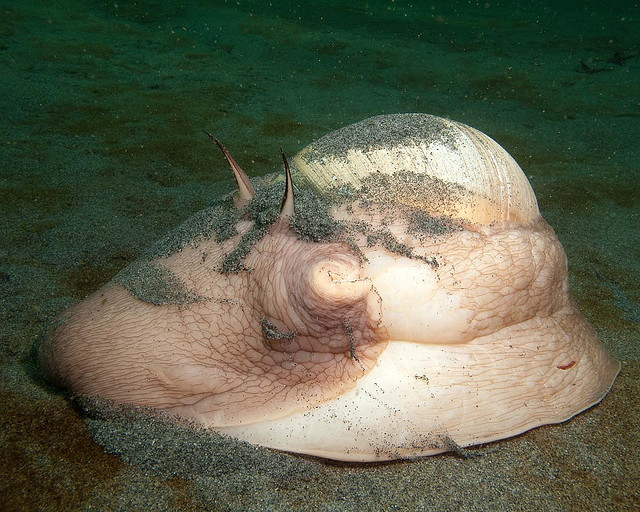
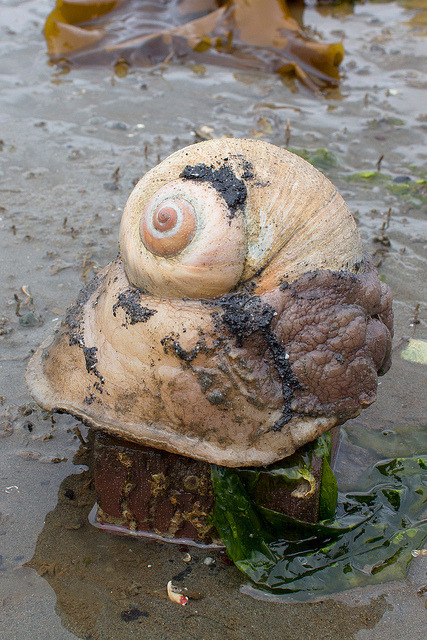
The giant Lewis’ Moon Snail - Neverita lewisii (Syn. Euspira lewisii)
Lewis’ Moon Snail, Neverita lewisii (Gastropoda - Naticidae), is a huge sea snail native to the Pacific Ocean coast of North America, from Canada to Baja California, Mexico). This is the largest of the moon snails, with shells up to 13 cm in diameter, however a fully expanded animal is several times larger than its shell. The snails plough forward with a foot just below the surface of the sand. When extended, the foot can measure over 30 cm in diameter.
Moon snails feed mostly on clams, mussels, or other mollusks. They are “boring predators”, meaning that they drill through the shell of their prey and ingest the tissue inside. In order to drill a prey item successfully, they must first detect and immobilize their prey, cover it in a mucus sheath and then transport it into the sediment to be drilled. Moon snails use a combination of an acidic enzyme and a “rasping tongue”, the radula, to penetrate their shelled prey. The radula, located at the end of the proboscis, scrapes the surface of the shell as the proboscis rotates 90 degrees, resulting in a fairly round and smooth borehole with an inner and outer edge. The accessory boring organ, located in the snail’s foot, secretes the acidic enzyme to soften the shell of the prey.
sábado, 29 de agosto de 2015
Anthopleura Xanthogrammica.

http://cuttlefishkate.tumblr.com/post/117152045193/in-honor-of-earth-day-heres-something-green-from
miércoles, 26 de agosto de 2015
Flower Mushroom Coral - Ricordea yuma
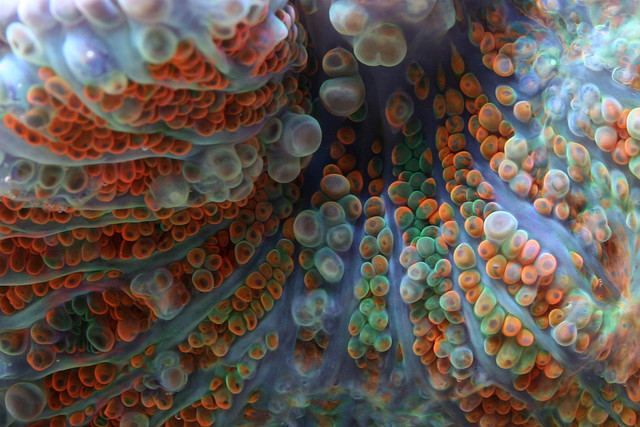
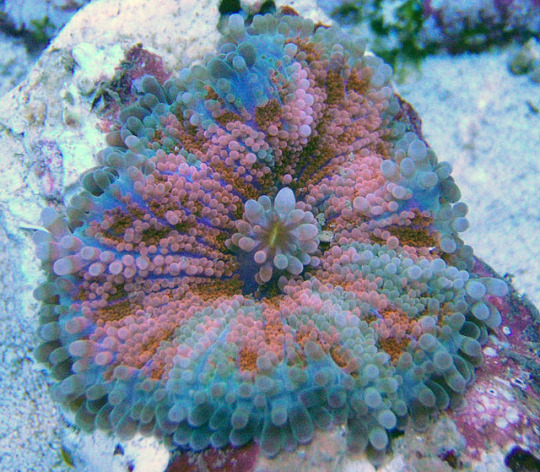
Flower Mushroom Coral - Ricordea yuma
Ricordea yuma (Corallimorpharia - Ricordeidae) is a species of soft coral belonging to a group commonly referred to as mushroom corals. These soft corals are very popular among aquarists due to their vibrant and varied color patterns.
Ricordea yuma is found in the tropical Pacific. Like other Corallimopharians, this one has the ability to rapidly colonize available substrate.
Suscribirse a:
Entradas (Atom)