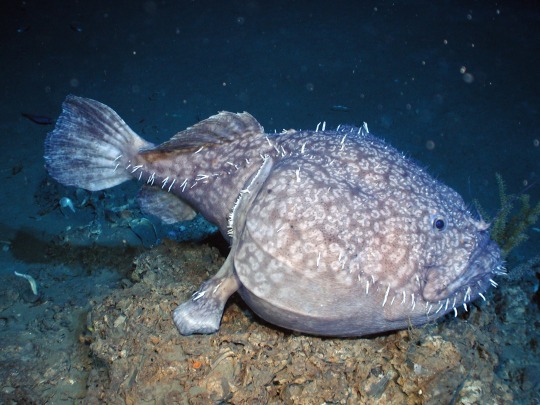
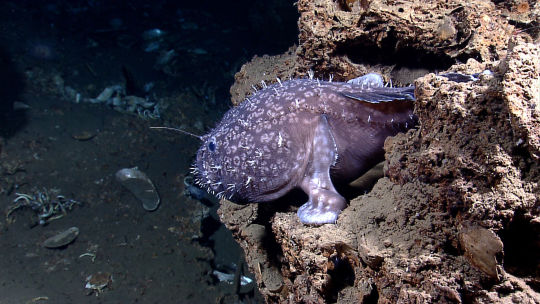
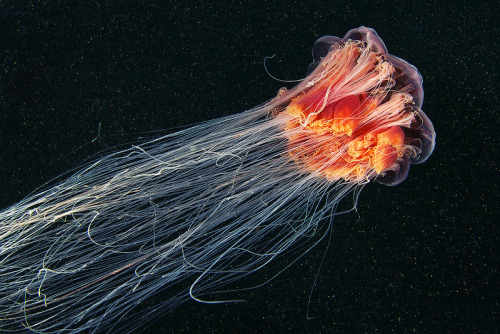
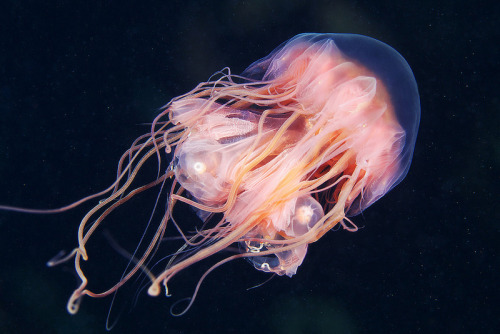
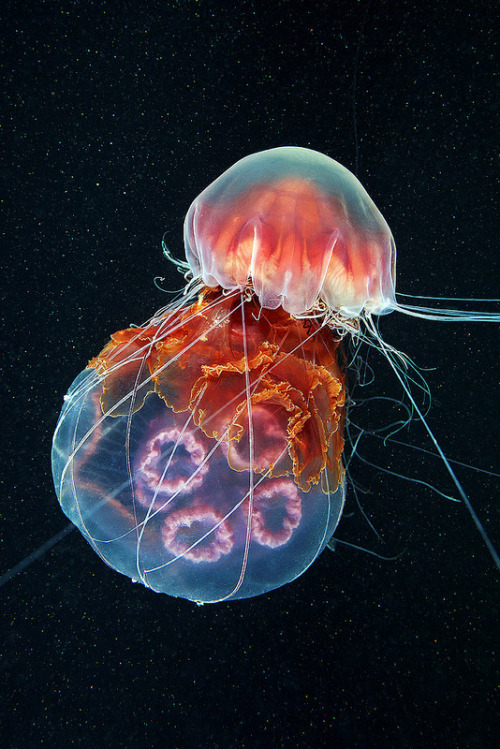
http://typhlonectes.tumblr.com/Deep Sea Goosefish (Sladenia) are anglerfish from the deep sea who lack the furious, devilish facial expressions of the classic deep sea anglerfish.They sit their podgy bodies on the sea floor, resting on four, thick fins adapted for walking.They have the classic lure for attracting prey but it isn’t luminescent.I’m sure things change when dinner comes along, but when they’re just sitting there they look like the sweetest little deep sea puppies!Images: NOAA
Ninguna ciencia, en cuanto a ciencia, engaña; el engaño está en quien no sabe. (Miguel de Cervantes)
domingo, 23 de agosto de 2015
Deep Sea Goosefish (Sladenia)
viernes, 21 de agosto de 2015
Light technologies mystery - with the thrilling conclusion!
Think you've solved the mystery of the professor's disappearance? Well, here's the conclusion, by popular vote!
http://nationalsciencefoundation.tumblr.com/
Visit NSF.gov/light to learn about the fundamental science and engineering discoveries that make these tools and future technologies possible.
Here’s our story so far: An astronomer at a world-class observatory is last seen burning the midnight optics when he suddenly goes missing. A forensic duo equipped with the latest light-based technologies arrives on the scene to investigate. An infrared temperature sensor and room-mapping lasers provide clues, while evidence is bagged and tracked with barcodes. High-speed communication networks powered by fiber optics allow investigators to transmit their findings and obtain additional information as needed. Finally, a forensic holodeck puts it all together and reveals the fate of the professor…
http://nationalsciencefoundation.tumblr.com/
Visit NSF.gov/light to learn about the fundamental science and engineering discoveries that make these tools and future technologies possible.
Here’s our story so far: An astronomer at a world-class observatory is last seen burning the midnight optics when he suddenly goes missing. A forensic duo equipped with the latest light-based technologies arrives on the scene to investigate. An infrared temperature sensor and room-mapping lasers provide clues, while evidence is bagged and tracked with barcodes. High-speed communication networks powered by fiber optics allow investigators to transmit their findings and obtain additional information as needed. Finally, a forensic holodeck puts it all together and reveals the fate of the professor…
jueves, 20 de agosto de 2015
Cook Inlet Beluga Whale.
NOAA Species Spotlight: Cook Inlet Beluga Whale
Beluga whales squeal, squeak, and chirp, and it’s why sailors long ago called them “sea canaries.” This species is gregarious and small (up to 15 feet long). Of the five Alaskan stocks, the Cook Inlet beluga stock is the smallest and the most isolated from other belugas.
Cook Inlet belugas once were a valuable part of the regional Alaska Native subsistence diet, but the population has declined rapidly. This rapid decline was most likely due to unregulated subsistence harvest at a level that this small population could not sustain. The hunt has been suspended since 2005, but unfortunately the whale population has not recovered as expected.
NOAA Fisheries designated the Cook Inlet beluga whale population as depleted under the Marine Mammal Protection Act in 2000, and listed these belugas as an endangered species under the Endangered Species Act (ESA) in 2008. The rapid decline and dire status of the Cook Inlet beluga whale population makes it a priority for focusing efforts within NOAA Fisheries and with our partners to stabilize and prevent extinction of this iconic species...
miércoles, 19 de agosto de 2015
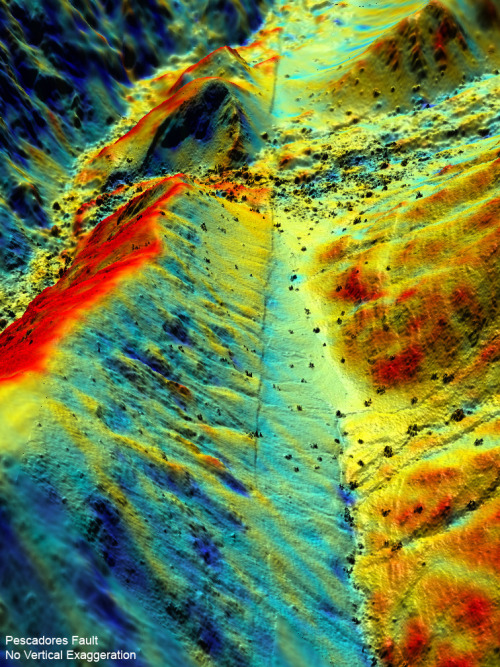
Year of Light: 3D laser map ‘illuminates’ earthquake faults
Geologists have an “illuminating” tool to study how earthquakes change the landscape–down to a few inches. And this laser-based technology is giving scientists insights into how earthquake faults behave.
In fact, a team of NSF-funded scientists from the United States, Mexico and China used the technology to obtain some of the most comprehensive before-and-after pictures of an earthquake zone, using data from the magnitude 7.2 event that struck near Mexicali, Mexico, in April 2010.
Working with the National Center for Airborne Laser Mapping (NCALM), the team flew over the area with LiDAR (light detection and ranging), which bounces a stream of laser pulses off the ground.
Image credit: Michael Oskin et al.,
lunes, 17 de agosto de 2015
Corrugated Liomera - Liomera rugata.
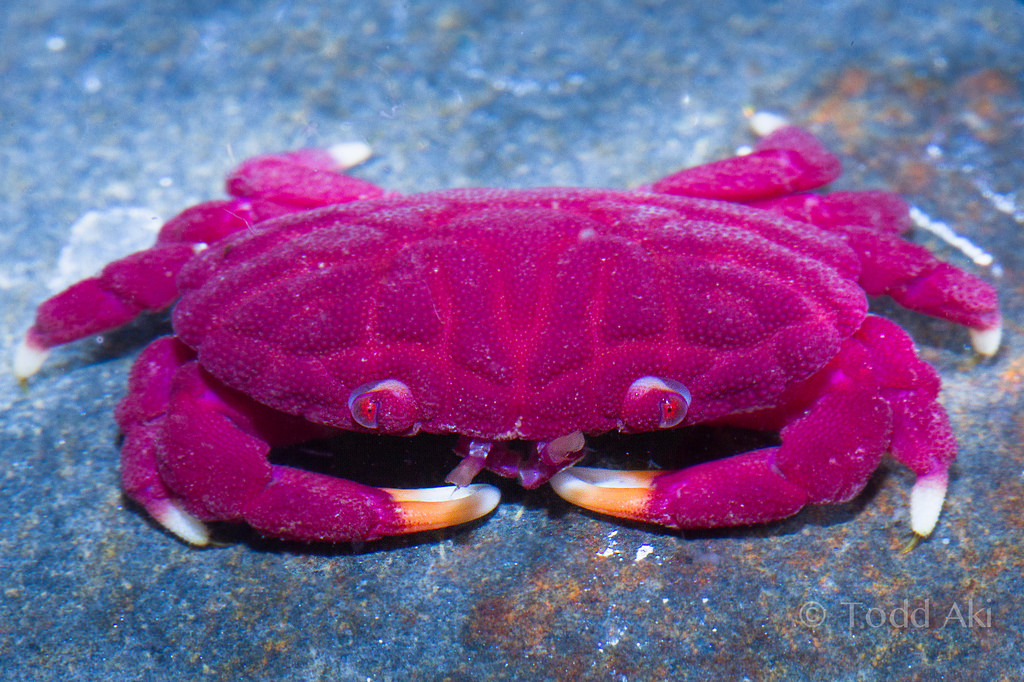
Corrugated Liomera - Liomera rugata
This ultra-pinkish crab (actually magenta) is scientifically named Liomera rugata (Decapoda - Xanthidae), a species which inhabits in coral reefs of the Red Sea, Tahiti, Hawaii, Philippines, China Sea, Japan, India and French Polynesia. It is also commonly known as Corrugated Crab due to the visible granules that cover the surface of carapace.
domingo, 16 de agosto de 2015
The Chemistry of Summer’s Pretty Insect.
As fireflies are delighting children across the country with their nighttime displays, scientists are closing in on a better understanding of how the insects produce their enchanting glow. They report in the Journal of the American Chemical Society new evidence of how the beetles’ chemistry works. Read more about this exciting discovery at:
http://pubs.acs.org/doi/abs/10.1021/jacs.5b03820
viernes, 14 de agosto de 2015
miércoles, 12 de agosto de 2015
Cellular Landscape, Evan Ingersoll & Gael McGill (Digizyme Inc, Brookline MA).
A cross-section through a dilute cytoplasm inspired by the art of David Goodsell.
martes, 11 de agosto de 2015
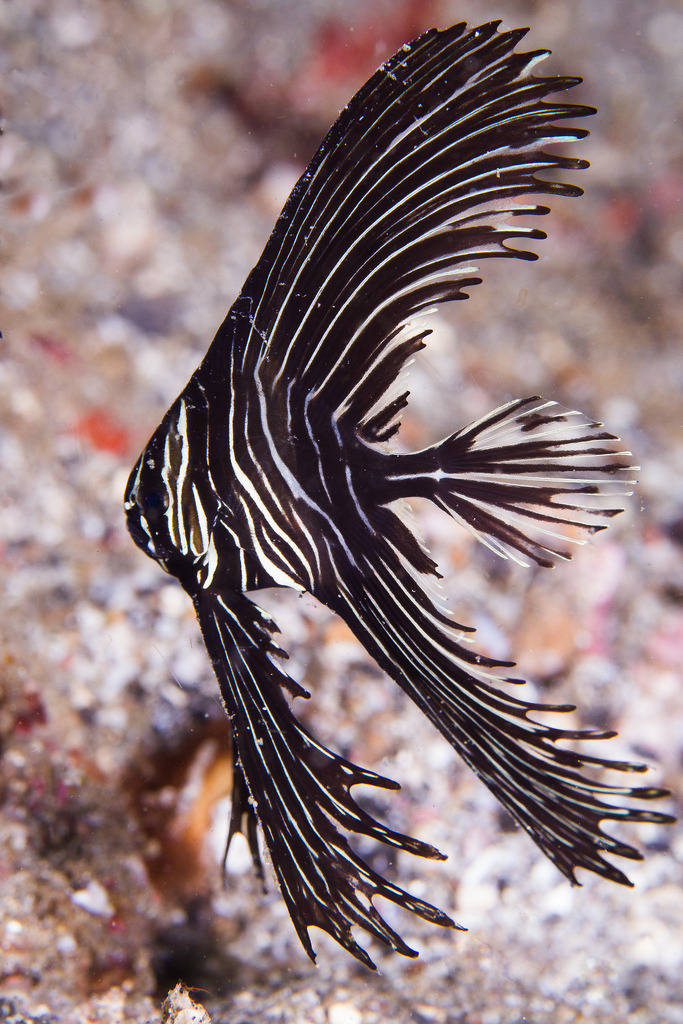
Humpback Batfish - Platax batavianus.
Humpback Batfish - Platax batavianus
Platax batavianus (Perciformes - Ephippidae) is a species of batfish which inhabits continental reefs from Madagascar to Indonesia and Australia. Juveniles of this species, like this one in the photo, are black with vertical white lines on body and fins; this zebra-pattern serves well as camouflage when sheltering with crinoids.
Adults are quite different, silvery, with only a dark bar through eye and another (faint) bar just behind head.
lunes, 10 de agosto de 2015
Suscribirse a:
Entradas (Atom)