domingo, 25 de octubre de 2015

Tomato frog (Dyscophus)

Tomato frog (Dyscophus)
Tomato frogs are any of the three species of genusDyscophus (family Microhylidae): D. antongilii, D. insularis, orD. guineti. They are endemic to Madagascar. When threatened, a tomato frog puffs up its body. If a predator grabs a tomato frog in its mouth, the frog’s skin secretes a thick substance that gums up the predator’s eyes and mouth, causing the predator to release the frog to free up its eyes. The gummy substance contains a toxin that occasionally causes allergic reactions in humans. The lifespan of the tomato frog can be from 6 to 8 years. They tend to eat small insects and invertebrates.
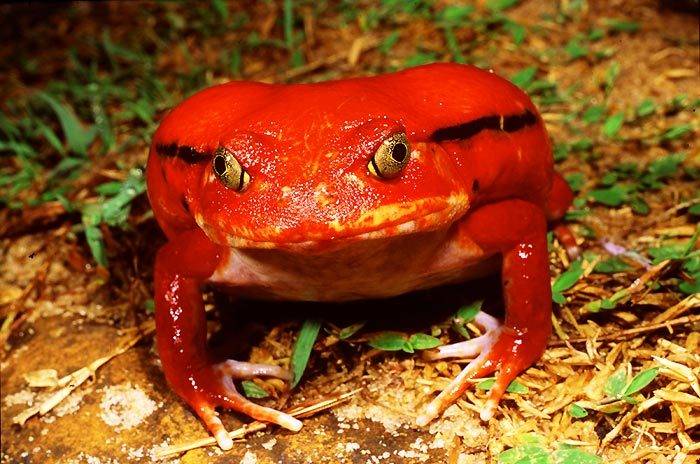
photo credits: lonestardigital, Franco Andreone

viernes, 23 de octubre de 2015

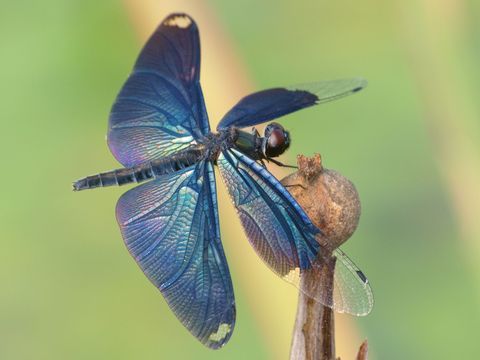
Rhyothemis fuliginosa

Rhyothemis fuliginosa
Rhyothemis fuliginosa is widespread throughout China and east Asia. Its habit are weedy ponds. 
                                      photo credits: Navian

miércoles, 21 de octubre de 2015

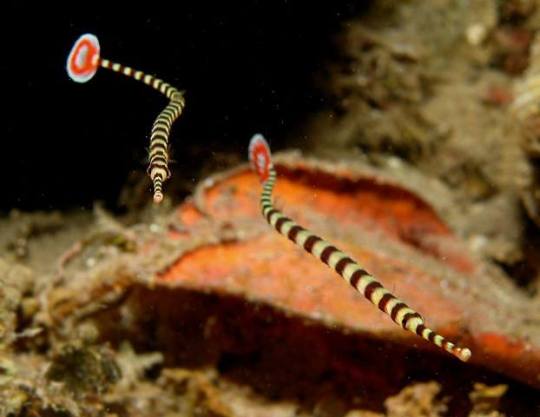
Banded pipefish (Dunckerocampus dactyliophorus)


Banded pipefish (Dunckerocampus dactyliophorus)

This little fish is a species of fish in the Syngnathidae (seahorses and pipefish) family. It is widespread throughout the tropical waters of the Indo-Pacific region, Red Sea included. It has a straight, elongated body which reaches a maximum length of 19 cm. Similar to other seahorses and pipefishes, the male banded pipefish is equipped with a specialised brood pouch, rather than the female. The female deposits her eggs in the male’s pouch, where they develop. The male later gives birth.

photo credits: wiki

lunes, 19 de octubre de 2015

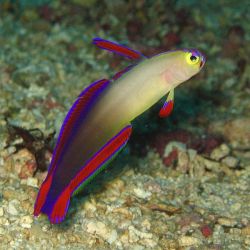
Elegant firefish nemateleotris

Elegant firefish (Nemateleotris decora)
The Elegant firefish is a species of dartfish native to tropical waters in the Indo-West Pacific, from Mauritius to Samoa, north to Ryukyu Islands, and south to New Caledonia. It is found over hard, open bottoms of reefs, sandy patches and rubble, as well as deeper coastal outer reef drop-offs where there are strong currents. It reaches a maximum length of 9 cm (3 in). This species is often found in pairs and is monogamous. They feed on zooplankton, especially the larvae of copepods and crustaceans. They will dart into holes when alarmed.
photo credits: wiki, jimirock, marinebreeder

sábado, 17 de octubre de 2015

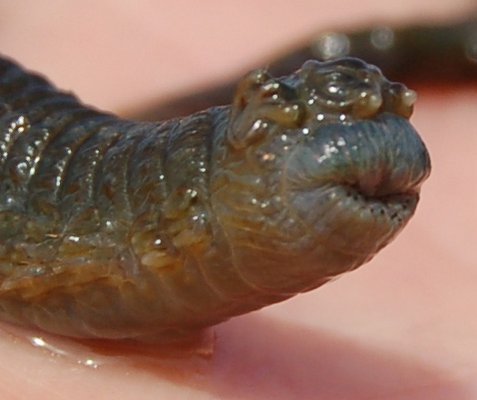
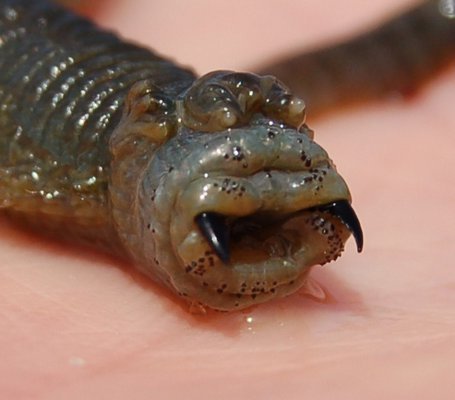
The clamworm.

The clamworm with a mouth that is harmless-looking when closed, but contains  a pair of formidable claw-like jaws. MIKE BOTTINI